

Quick Answer
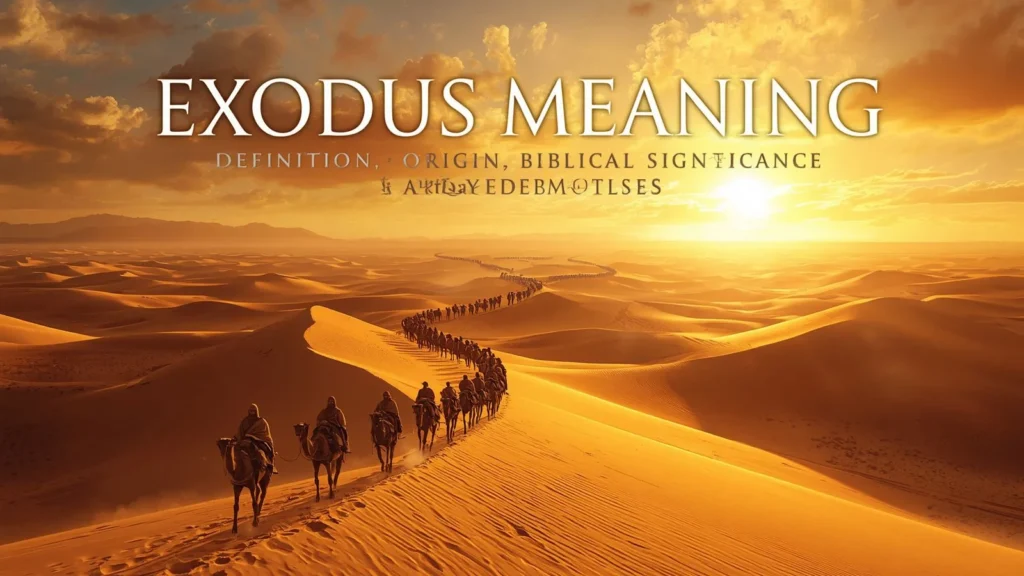
The Exodus meaning is a mass departure or migration of people from one place to another. The term is also the name of the second book of the Bible, which tells the story of the Israelites leaving slavery in Egypt under the leadership of Moses.
The word exodus is commonly used to describe a large group of people leaving a place, often because of war, natural disasters, political unrest, or the search for better opportunities. While it originally comes from the Bible, the term has become part of everyday English and is frequently used in news reports, history books, and casual conversations.
Many people first encounter the word Exodus while reading the Bible, where it refers to the journey of the Israelites out of Egypt. However, in modern English, exodus can describe any significant movement of people from one location to another. Understanding the Exodus meaning helps you recognize its historical importance as well as its everyday usage.
Exodus Meaning at a Glance
| Word | Exodus |
|---|---|
| Pronunciation | EK-suh-dus |
| Part of Speech | Noun |
| Primary Meaning | A mass departure or migration of people. |
| Biblical Meaning | The departure of the Israelites from Egypt led by Moses. |
| Language of Origin | Greek |
| Common Contexts | History, religion, news, politics, migration, and everyday English |
| Synonyms | Migration, departure, evacuation, escape, relocation |
| Antonyms | Arrival, settlement, return, immigration |
| Example Sentence | The war caused a large exodus of families from the region. |
What Does Exodus Mean?
The word exodus refers to a large-scale departure of people from a place, usually because of difficult conditions or the hope of finding a better life.
It may involve thousands or even millions of people moving together.
Example:
The natural disaster led to an exodus from the coastal towns.
The Origin of the Word Exodus
The word exodus comes from the Greek word “exodos,” meaning “the road out” or “a going out.”
It later became the title of the second book of the Bible, which tells the story of Moses leading the Israelites out of slavery in Egypt toward the Promised Land.
Today, the word is used both in religious contexts and in everyday English.
Exodus Meaning in Different Contexts
In the Bible
Exodus is the second book of the Bible and describes God’s deliverance of the Israelites from Egypt through Moses.
Example:
The Book of Exodus tells the story of the Ten Plagues and the crossing of the Red Sea.
In News Reports
Journalists often use exodus when reporting large migrations caused by war, disasters, or economic problems.
Example:
The conflict triggered a massive exodus of civilians.
In History
Historians use the word to describe significant population movements.
Example:
The country experienced an exodus during the economic crisis.
In Everyday Conversations
People sometimes use exodus humorously to describe a large number of people leaving at once.
Example:
There was an exodus from the stadium after the final whistle.
Common Uses of Exodus
Mass Migration
Describing large groups relocating.
Example:
The drought caused an exodus of farmers.
Religious Context
Referring to the biblical journey of the Israelites.
Example:
Many churches study the Book of Exodus.
Population Movement
Used in discussions about immigration or relocation.
Example:
Young professionals are part of the urban exodus.
Examples of Exodus in Sentences
- The flood caused an exodus from nearby villages.
- Thousands joined the exodus seeking safer conditions.
- The Book of Exodus is one of the most important books in the Bible.
- Economic problems led to an exodus of skilled workers.
- The concert ended with a quick exodus of fans.
- Historians continue to study the biblical Exodus.
- The city witnessed an exodus after the earthquake.
- Many families planned their exodus before winter arrived.
Synonyms of Exodus
Depending on the context, similar words include:
- Migration
- Departure
- Evacuation
- Escape
- Relocation
- Flight
- Withdrawal
- Mass movement
- Emigration
- Retreat
Antonyms of Exodus
Words with opposite meanings include:
- Arrival
- Settlement
- Immigration
- Return
- Homecoming
- Entrance
- Stay
- Residence
Exodus vs Migration
Although the two words are similar, they are not exactly the same.
| Exodus | Migration |
|---|---|
| Usually describes a large, sudden departure. | Can refer to any movement of people or animals. |
| Often caused by difficult circumstances. | May happen for work, climate, education, or seasonal reasons. |
| Frequently used in historical and religious contexts. | Commonly used in geography and social sciences. |
Why Is Exodus So Well Known?
The word Exodus is famous because of its importance in the Bible and its continued use in modern language.
Today, you’ll commonly hear it in:
- News reports
- History books
- Religious teachings
- Political discussions
- Documentaries
- Newspapers
- Television
- Everyday conversations
Its powerful association with freedom and large-scale movement has made it one of the most recognized words in English.
FAQs
What does exodus mean?
Exodus means a large-scale departure or migration of people from one place to another.
What is the biblical meaning of Exodus?
In the Bible, Exodus refers to the Israelites’ escape from slavery in Egypt under the leadership of Moses.
Is Exodus a real historical event?
The biblical Exodus is a central story in Judaism and Christianity. Its historical details are the subject of ongoing scholarly research and debate.
How is exodus used in everyday English?
It is commonly used to describe a large group of people leaving an area because of war, disasters, economic conditions, or other major events.
What is the difference between exodus and migration?
Exodus usually refers to a sudden, large departure, while migration is a broader term for movement from one place to another.
How do you pronounce exodus?
It is commonly pronounced EK-suh-dus.
Conclusion
The Exodus meaning is a mass departure or migration of people, making it one of the most powerful words used to describe large-scale movements throughout history. While it is best known as the title of the second book of the Bible, the term is also widely used in modern news, history, and everyday conversations. Whether referring to the biblical journey led by Moses or people leaving an area because of difficult circumstances, exodus continues to symbolize hope, freedom, and the search for a better future.