
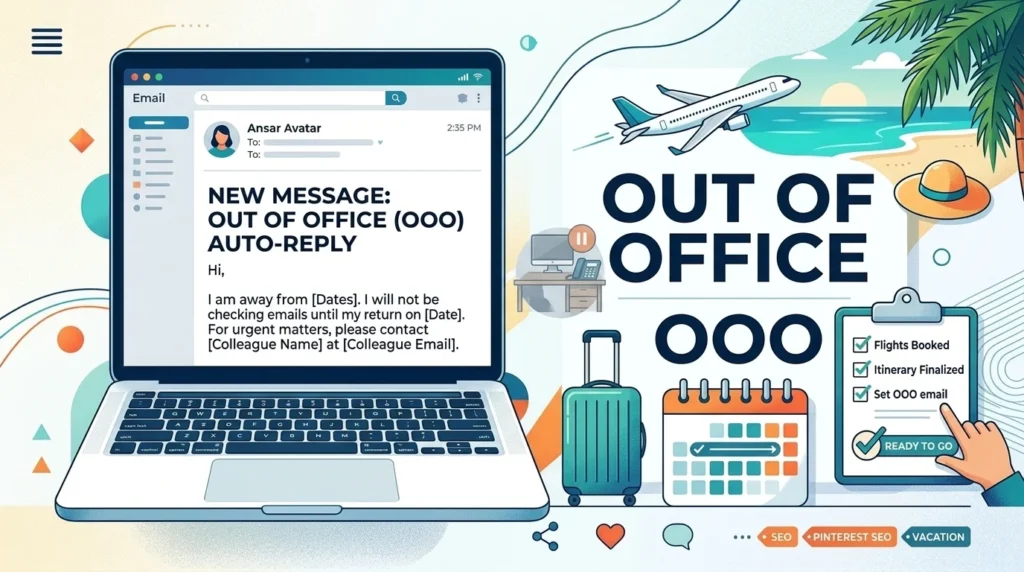

Quick Answer:
OOO most commonly stands for “Out of Office.” It is widely used in emails, workplace chats, and business communication to indicate that someone is away from work and may not respond immediately. In casual conversations, OOO can also express excitement or amazement, depending on the context.
Have you ever received an email with “OOO” in the subject line or seen someone mention they were “OOO today”? If so, you may have wondered what it means. OOO is one of the most common workplace abbreviations, but it can also appear in social media posts and text messages with different meanings. This guide explains the OOO meaning, its origin, examples, alternate meanings, and how to use it correctly in different situations.
OOO Meaning
In professional communication, OOO stands for “Out of Office.” It means a person is away from work due to vacation, illness, a business trip, or another reason and may not be available to respond to emails or messages.
For example:
- “I’m OOO until Monday.”
- “My OOO reply is now active.”
- “She’s OOO this week.”
Pronunciation
OOO is usually pronounced by saying each letter separately:
O-O-O
Meaning at a Glance
| Term | Meaning |
|---|---|
| OOO | Out of Office |
| Type | Business abbreviation |
| Common Usage | Emails, workplace chats, calendars |
| Tone | Professional |
| Formality | Suitable for business communication |
The Origin of OOO
The abbreviation OOO became popular as email services introduced automatic vacation replies, often called Out of Office messages. Instead of writing the full phrase repeatedly, professionals began using the shorter abbreviation in workplace conversations.
Today, OOO is recognized across businesses worldwide and is commonly used in emails, messaging apps like Slack and Microsoft Teams, and office calendars.
Why Is OOO So Popular?
OOO saves time and quickly lets coworkers know that someone is unavailable.
You’ll commonly see OOO in:
- Work emails
- Microsoft Teams
- Slack
- Google Calendar
- Outlook
- Business chat apps
- Office status messages
It has become a standard abbreviation in professional communication.
How Is OOO Used?
People use OOO to inform others that they won’t be available during a certain period.
Examples
- “I’ll be OOO tomorrow.”
- “My OOO message is active until Friday.”
- “She’s OOO due to vacation.”
- “He’s OOO for a conference.”
Examples of OOO in Conversations
| Message | Meaning | Tone |
|---|---|---|
| “I’m OOO today.” | Out of Office | Professional |
| “She’s OOO until next week.” | Away from work | Informative |
| “Please check my OOO reply.” | Automatic email response | Business |
| “I’ll be OOO on Friday.” | Unavailable | Neutral |
| “He’s OOO for training.” | Away from the office | Professional |
Tone Explained
The meaning of OOO depends on where it’s used.
Professional Tone
Most commonly used to inform coworkers about an absence.
Example:
“I’ll be OOO from Monday to Wednesday.”
Informative Tone
Used in calendars or email signatures.
Example:
“Currently OOO. I’ll reply upon my return.”
Casual Tone
On social media, some people use OOO playfully to mean they’re taking a break from work.
Example:
“OOO mode: Beach vacation! 🌴”
OOO vs Similar Abbreviations
| Abbreviation | Meaning | Difference |
|---|---|---|
| OOO | Out of Office | Indicates someone is unavailable |
| PTO | Paid Time Off | Refers to leave from work |
| WFH | Work From Home | Working remotely |
| OOF | Out of Office (less common) or expression of sympathy | Different context |
| ETA | Estimated Time of Arrival | Gives an expected arrival time |
Alternate Meanings of OOO
Although Out of Office is the most common meaning, OOO can also mean:
- Expression of excitement or amazement in social media posts.
- Out of Order (occasionally, though OOO is less common than OOS or the full phrase).
- Organization-specific abbreviations in certain industries.
The correct meaning depends on the context.
When Should You Use OOO?
Use OOO when:
- You’re on vacation.
- You’re attending a conference.
- You’re away due to illness.
- You’re taking personal leave.
- You want coworkers to know you’re unavailable.
It’s appropriate for business emails, calendars, and workplace messaging platforms.
Common Mistakes
Using OOO Without Dates
It’s helpful to mention when you’ll return so others know when to expect a response.
Forgetting an Automatic Reply
If you’re away for several days, setting an Out of Office email helps keep colleagues informed.
Assuming OOO Always Means Vacation
OOO simply means someone is away from work. The reason could be vacation, illness, training, or another absence.
FAQs
What does OOO mean?
OOO most commonly stands for “Out of Office.” It tells others that a person is away from work and may not respond immediately.
What does OOO mean in an email?
In emails, OOO usually refers to an automatic Out of Office reply that informs senders the recipient is currently unavailable.
Is OOO only used for vacations?
No. OOO can also be used when someone is away because of illness, training, conferences, or personal leave.
Where is OOO commonly used?
OOO is widely used in Outlook, Gmail, Slack, Microsoft Teams, Google Calendar, and workplace communication.
Can OOO have other meanings?
Yes. On social media, OOO can sometimes express excitement or indicate taking a break, but Out of Office remains the most common meaning.
Should I use OOO in professional communication?
Yes. OOO is a widely accepted business abbreviation and is commonly used in workplace emails and chats.
How do I write an OOO message?
A good OOO message states that you’re away, mentions your return date, and provides an alternative contact if necessary.
When should I turn on my OOO reply?
Activate your Out of Office reply before leaving work if you’ll be unavailable for an extended period.
Conclusion
The OOO meaning most commonly stands for “Out of Office.” It’s a standard business abbreviation used to let coworkers, clients, and customers know that someone is temporarily unavailable. Whether you’re on vacation, attending a conference, or taking personal leave, using OOO helps set clear expectations about your availability. While it can occasionally have other meanings, Out of Office is by far the most recognized definition.