

Quick Answer:
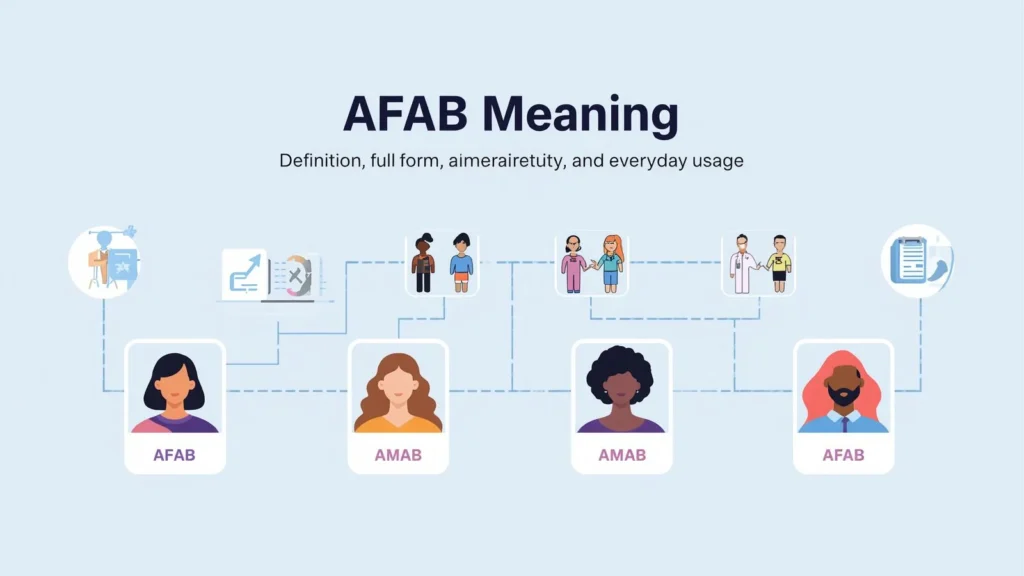
The AFAB meaning is “Assigned Female at Birth.” It describes a person who was identified as female when they were born based on physical characteristics, regardless of their current gender identity.
The term AFAB has become increasingly common in discussions about gender, healthcare, identity, and inclusion. While many people first encounter it on social media or in online communities, it is also widely used in medical, educational, and LGBTQ+ contexts. AFAB does not describe a person’s current gender identity. Instead, it refers only to the sex that was assigned to them at birth by medical professionals.
Understanding the AFAB meaning is important because it helps people communicate more accurately and respectfully when discussing gender. Whether you’re reading an article, filling out a form, or learning about gender identity, knowing what AFAB stands for can prevent confusion. This guide explains its definition, origin, examples, related terms, and how it is used in everyday language.
AFAB Meaning at a Glance
| Term | AFAB |
|---|---|
| Full Form | Assigned Female at Birth |
| Pronunciation | AY-fab |
| Part of Speech | Acronym |
| Primary Meaning | A person identified as female at birth based on physical characteristics. |
| Common Meaning | Describes sex assigned at birth, not current gender identity. |
| Common Contexts | Gender identity, healthcare, education, LGBTQ+ discussions, and social media |
| Related Term | AMAB (Assigned Male at Birth) |
| Example Sentence | The survey asked whether participants were AFAB or AMAB. |
What Does AFAB Mean?
AFAB stands for Assigned Female at Birth.
When a baby is born, a healthcare provider usually records the baby’s sex based on visible physical characteristics. If the baby is recorded as female, that person is described as AFAB.
The term only refers to what was assigned at birth. It does not indicate how a person identifies later in life.
Example:
Alex was AFAB but later identified as nonbinary.
The Origin of the Term AFAB
The phrase Assigned Female at Birth became more widely used as healthcare professionals, researchers, and advocacy groups looked for language that clearly distinguishes sex assigned at birth from gender identity.
Today, the acronym AFAB is commonly used in:
- Healthcare
- Psychology
- Gender studies
- Educational resources
- LGBTQ+ communities
- Online discussions
AFAB Meaning in Different Contexts
Healthcare
Doctors may use AFAB when discussing medical history, anatomy, or health conditions that are relevant to a person’s body.
Example:
Some health screenings are recommended for AFAB individuals based on their anatomy.
Gender Identity
AFAB refers only to the sex assigned at birth. A person’s gender identity may or may not match that assignment.
Example:
Someone who is AFAB may identify as a woman, a man, nonbinary, or another gender.
Education
Schools and educational materials sometimes use the term when discussing biology, health, or gender diversity.
Example:
The lesson explained the difference between AFAB and gender identity.
Social Media
Many people include AFAB in online profiles or conversations to describe their background without stating their current gender identity.
Example:
“AFAB, nonbinary, they/them.”
AFAB vs AMAB
These two acronyms are often used together.
| AFAB | AMAB |
|---|---|
| Assigned Female at Birth | Assigned Male at Birth |
| Female recorded at birth | Male recorded at birth |
| Refers to sex assigned at birth | Refers to sex assigned at birth |
| Does not define current gender identity | Does not define current gender identity |
Why Is AFAB Used Instead of “Born Female”?
Many people prefer the term AFAB because it clearly separates sex assigned at birth from gender identity.
This wording recognizes that a person’s identity may develop differently over time.
Examples of AFAB in Sentences
- She explained that she was AFAB.
- The research included both AFAB and AMAB participants.
- Some healthcare recommendations differ for AFAB individuals.
- AFAB does not describe someone’s gender identity.
- The article explained the meaning of AFAB in simple terms.
- Many online communities use the abbreviation AFAB.
- The survey included questions about whether participants were AFAB or AMAB.
- Understanding AFAB helps make conversations about gender more accurate.
Related Terms
Some commonly related terms include:
- AMAB
- Gender identity
- Sex assigned at birth
- Cisgender
- Transgender
- Nonbinary
- Gender expression
- Pronouns
Synonyms
Depending on the context, similar expressions include:
- Assigned female at birth
- Female assigned at birth (less common wording)
Antonyms
- AMAB (Assigned Male at Birth)
FAQs
What does AFAB mean?
AFAB stands for Assigned Female at Birth. It refers to someone who was identified as female when they were born based on physical characteristics.
Does AFAB mean someone is a woman?
No. AFAB describes the sex assigned at birth, not a person’s current gender identity.
What is the opposite of AFAB?
The opposite term is AMAB, which stands for Assigned Male at Birth.
Why do people use the term AFAB?
It helps distinguish between sex assigned at birth and gender identity, making discussions about gender more precise.
Is AFAB only used in the LGBTQ+ community?
No. It is also used in healthcare, education, research, and other settings where discussing sex assigned at birth is relevant.
How do you pronounce AFAB?
It is commonly pronounced AY-fab.
Conclusion
The AFAB meaning is Assigned Female at Birth, referring to the sex recorded for a person at birth based on physical characteristics. It does not describe how someone identifies later in life. Today, the term is widely used in healthcare, education, research, and conversations about gender because it provides a clear and respectful way to distinguish between sex assigned at birth and gender identity. Understanding AFAB can help you interpret modern discussions more accurately and use the term appropriately in different contexts.
See Also More :
- 230+ Replies to “I Am Sick”: That Are Caring, Funny, Polite & Text-Ready
- 300+ Leading Software for Google Replies in 2026