

Quick Answer
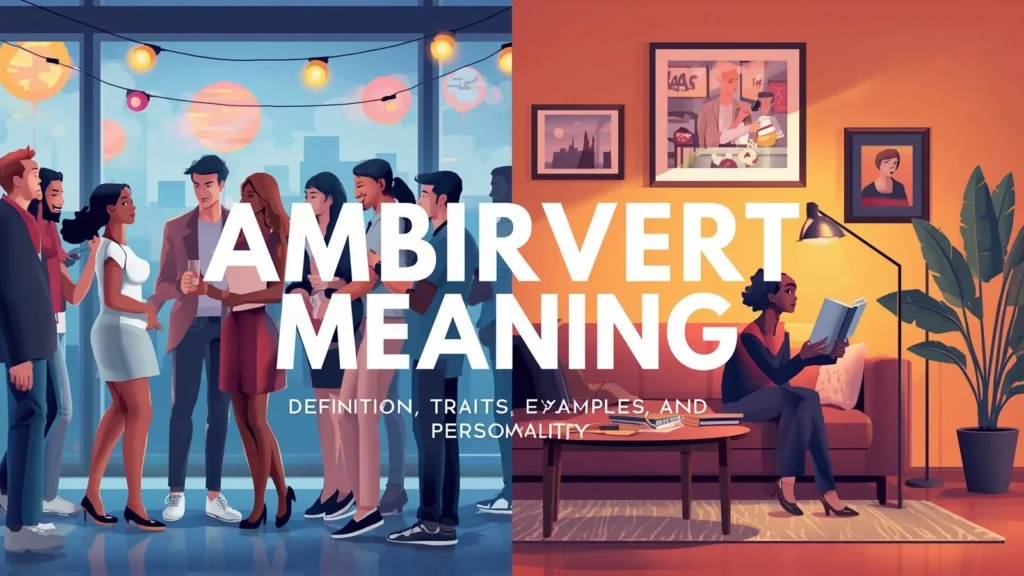
The ambivert meaning is a person whose personality includes both introverted and extroverted traits. An ambivert enjoys social interactions but also values quiet time alone, depending on the situation and their energy level.
Ever feel social and outgoing in one situation but prefer quiet time alone in another? You may be an ambivert. The ambivert meaning refers to a person who has a mix of introverted and extroverted traits, allowing them to enjoy social interaction while also appreciating solitude. Unlike someone who strongly identifies as an introvert or extrovert, an ambivert can shift between these preferences depending on their mood, environment, or circumstances.
The term has become increasingly popular as more people recognize that personality is not always as simple as choosing between “introvert” and “extrovert.” You may be highly social with close friends but need time alone afterward, or confident in a group while still enjoying your own space. In this guide, we’ll explain the ambivert meaning, common characteristics, real-life examples, and how ambiverts differ from introverts and extroverts.
Ambivert Meaning at a Glance
| Word | Ambivert |
|---|---|
| Pronunciation | AM-bi-vurt |
| Part of Speech | Noun |
| Primary Meaning | A person who has both introvert and extrovert characteristics. |
| Common Meaning | Someone who is comfortable being social but also enjoys spending time alone. |
| Common Contexts | Psychology, personality tests, education, workplaces, relationships, and self-development |
| Synonyms | Balanced personality, adaptable person, social introvert (depending on context) |
| Antonyms | Introvert, extrovert (extreme personality types) |
| Example Sentence | She considers herself an ambivert because she enjoys parties but also values quiet evenings at home. |
What Does Ambivert Mean?
An ambivert is someone who displays both introverted and extroverted behaviors.
Instead of fitting entirely into one personality type, an ambivert adjusts naturally to different situations. They may enjoy attending social events one day and prefer spending the next day relaxing alone.
Example:
He’s an ambivert who enjoys meeting new people but also needs time to recharge by himself.
The Origin of the Word Ambivert
The word ambivert combines two parts:
- Ambi, meaning “both” or “on both sides.”
- Vert, taken from the words introvert and extrovert.
The term became popular in psychology to describe people whose personalities fall between the two extremes.
Today, personality experts often recognize that many individuals are ambiverts rather than purely introverted or extroverted.
Characteristics of an Ambivert
People with an ambivert personality often share several common traits.
- Comfortable in both social and quiet environments.
- Enjoy meaningful conversations as well as personal reflection.
- Adapt easily to different groups of people.
- Know when to speak and when to listen.
- Balance social activities with personal time.
- Can lead discussions but also enjoy observing.
- Often communicate well with different personality types.
These traits make ambiverts highly adaptable in many areas of life.
Ambivert vs Introvert vs Extrovert
Understanding the differences makes the meaning much clearer.
| Ambivert | Introvert | Extrovert |
|---|---|---|
| Enjoys both socializing and solitude | Prefers quiet environments and alone time | Gains energy from being around people |
| Flexible in different situations | Usually reserved | Usually outgoing |
| Balances talking and listening | Enjoys deep conversations | Enjoys meeting many people |
| Adapts easily | Needs time alone to recharge | Feels energized through social interaction |
Ambivert Meaning in Different Contexts
At Work
Ambiverts often perform well in team projects while also handling independent tasks effectively.
Example:
Her ambivert personality helps her work well with clients and coworkers.
In School
Students with ambivert traits enjoy group discussions but also appreciate studying alone.
Example:
He’s an ambivert who likes classroom debates and independent reading.
In Relationships
Ambiverts usually balance spending time with loved ones and enjoying personal space.
Example:
Their ambivert personalities helped them understand each other’s need for both social time and privacy.
In Leadership
Because they know when to listen and when to speak, ambiverts often become effective leaders.
Example:
Many successful managers have ambivert qualities.
Examples of Ambivert in Sentences
- She describes herself as an ambivert.
- His ambivert personality makes him easy to work with.
- I’m an ambivert because I enjoy parties but also need quiet weekends.
- Many people are naturally ambiverts.
- The personality test suggested she was an ambivert.
- As an ambivert, he enjoys both teamwork and independent projects.
- Her ambivert nature helps her adapt to new environments.
- Being an ambivert allows him to connect with many different people.
Advantages of Being an Ambivert
Many people consider ambiverts highly adaptable because they can adjust to different situations.
Some advantages include:
- Strong communication skills
- Flexible social behavior
- Good listening abilities
- Comfortable leadership style
- Balanced decision-making
- Easier relationship building
- Adaptability in work and school
Synonyms of Ambivert
Depending on the context, similar expressions include:
- Balanced personality
- Adaptable person
- Flexible personality
- Social introvert (in some situations)
- Moderate extrovert (depending on personality)
Antonyms of Ambivert
Words with opposite meanings include:
- Introvert
- Extrovert
- Recluse (depending on context)
- Social butterfly (informal)
FAQs
What does ambivert mean?
An ambivert is a person who has both introverted and extroverted personality traits, enjoying social interaction as well as time alone.
Is an ambivert an introvert or an extrovert?
Neither completely. An ambivert falls somewhere between the two and can display qualities of both.
Can someone become an ambivert?
Personality can develop over time, and many people naturally show a mix of introverted and extroverted behaviors depending on their experiences and environment.
Is being an ambivert common?
Yes. Many psychologists believe that a large number of people are ambiverts rather than fitting entirely into one personality type.
What are the strengths of an ambivert?
Ambiverts are often adaptable, good communicators, effective listeners, and comfortable in a variety of social and professional situations.
How do I know if I’m an ambivert?
If you enjoy spending time with people but also value quiet time alone to recharge, you may have an ambivert personality.
Conclusion
The ambivert meaning describes a personality that combines the strengths of both introverts and extroverts. Instead of belonging to one extreme, ambiverts enjoy a healthy balance between social interaction and personal time.
Their flexibility, communication skills, and ability to adapt make them successful in relationships, workplaces, schools, and everyday life. Understanding this personality type can help you better understand yourself and the people around you.
See Also More :
- Lapis Lazuli Crystal Meaning: History, Energy, and Benefits For 2026
- Gist Meaning: Definition, Examples, Origin, and How to Use It Correctly for 2026