
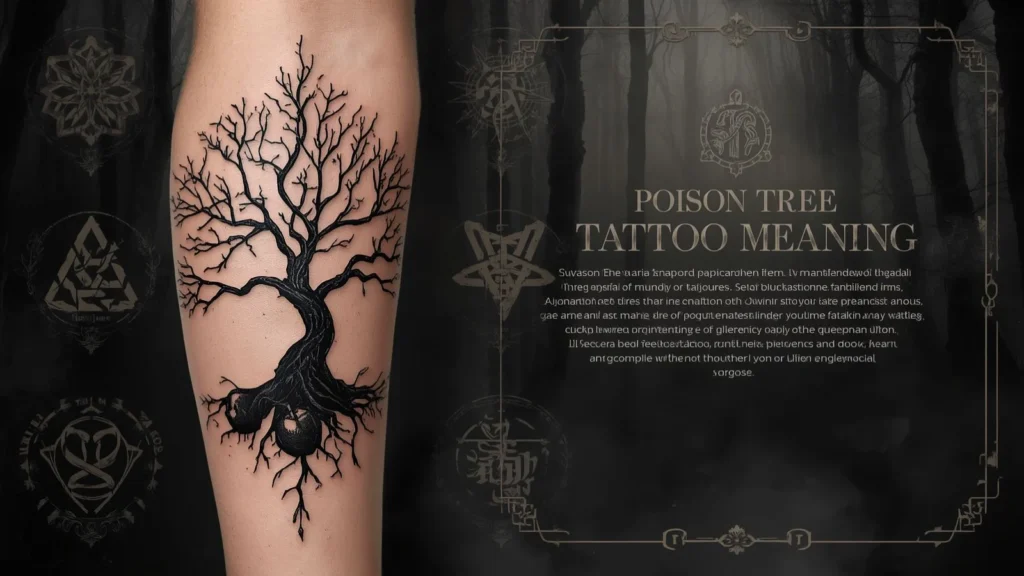

A poison tree tattoo represents the transformation of pain, betrayal, and inner darkness into something beautiful and powerful. People choose this design to symbolize how toxic experiences can shape them without destroying them, turning bitterness into personal growth and artistic expression.
Have you ever felt so wronged that the anger seemed to grow inside you like something alive? William Blake captured that exact feeling in his poem “A Poison Tree,” where suppressed wrath blossoms into a deadly fruit. Now imagine taking that literary image and etching it permanently onto your skin. The poison tree tattoo meaning draws from this rich tradition of turning emotional venom into visual art. It speaks to anyone who has nursed a grudge, survived betrayal, or watched their own pain transform into unexpected strength. This is not a tattoo for the faint of heart. It is for people who understand that some of the most beautiful things in life grow from the darkest soil.
Poison Tree Tattoo Meaning Explained
At its foundation, this tattoo connects to William Blake’s 1794 poem “A Poison Tree” from his collection “Songs of Experience.” In the poem, the narrator cultivates anger against a foe while openly expressing anger toward a friend. The suppressed wrath grows into a tree bearing poisoned apples, which ultimately kill the enemy who steals them. The moral is stark and unforgettable. Bottled-up resentment becomes a weapon, often hurting the bearer as much as the target.
People who choose a poison tree tattoo engage with this theme on deeply personal levels. For some, the design warns against letting bitterness fester. The tree serves as a permanent reminder to process anger healthily rather than letting it bear toxic fruit. For others, the tattoo celebrates survival. They have been the ones poisoned by someone else’s hidden wrath, and the ink marks their resilience. Still others embrace the darker reading. They acknowledge their own capacity for vengeance and wear the tree as a warning to those who might wrong them.
Visually, poison tree tattoos vary enormously. Some depict gnarled, leafless branches dripping with skull-shaped fruit or serpents coiled around trunks. Others show vibrant green canopies hiding deadly berries beneath beautiful leaves. Many incorporate quotes from Blake’s poem, particularly the final lines about the foe outstretched beneath the tree. The artistic range reflects the emotional range of the people who wear them.
The poison tree tattoo meaning also extends beyond Blake’s specific text. In broader symbolism, poison trees appear in mythology and folklore worldwide. The Upas tree of Java was legendary for killing everything around it. Yggdrasil, the Norse world tree, has roots in poisonous realms. These cross-cultural echoes add layers for people who want their ink to carry universal weight rather than purely literary reference.
Origin of the Poison Tree Symbol
William Blake wrote “A Poison Tree” during a turbulent period in British history. The French Revolution had inspired hope then devolved into terror. The British government cracked down on dissent. Blake himself faced charges of sedition for his radical views. His poetry channeled this atmosphere of suppressed rage and institutional violence into seemingly simple verses about gardens and trees.
The poem’s enduring power comes from its accessibility. Readers do not need to know Blake’s biography to feel the truth of his metaphor. Everyone has experienced anger they did not express. Everyone has watched resentment grow in silence. This universality made the poison tree a natural candidate for tattoo art, which itself transforms private feeling into public symbol.
The tattoo trend emerged gradually. Literary tattoos gained popularity in the 2000s as body art became more mainstream and socially acceptable. Blake, with his visionary imagery and countercultural reputation, attracted a devoted following among artists, musicians, and rebels. “A Poison Tree” specifically resonated with people who had experienced betrayal in relationships, workplaces, or families. By the 2010s, poison tree designs were appearing regularly on tattoo forums and Pinterest boards.
The symbol also connects to broader movements in mental health awareness. As society became more open about discussing toxic relationships and emotional abuse, the poison tree offered a visual vocabulary for experiences that are hard to articulate. Survivors could point to their ink and say “This is what it felt like” without having to explain further.
How People Use and Reference Poison Tree Tattoos
People reference poison tree tattoos in various tones depending on their relationship to the symbol and their audience. Understanding these tones helps appreciate the full emotional spectrum of this design.
Personal and Reflective Tone
For many wearers, the poison tree tattoo is deeply private. They might not volunteer its meaning unless asked directly. When they do explain, the tone is often contemplative and vulnerable. “I got this after my business partner stole everything,” someone might say, tracing the branches on their arm. “The tree reminds me that my anger could have destroyed me, but I chose to grow instead.” These stories are intimate and often emotional. The tattoo becomes a tool for processing and testimony.
Defiant and Warning Tone
Some people wear their poison tree as a clear message to others. The tone here is bolder, sometimes even aggressive. “This is what happens when you push me too far,” the tattoo seems to say. These wearers often choose more sinister visual elements. Skulls, snakes, and dark color palettes dominate. The poison tree becomes a shield and a weapon, a way to announce boundaries without speaking.
Artistic and Literary Tone
Literature enthusiasts and art collectors approach the poison tree from a different angle. They might discuss Blake’s poetry, the Romantic era, or the visual possibilities of the metaphor. Their tone is appreciative and intellectual. The tattoo is not just personal expression but participation in a cultural tradition. They might compare their design to Blake’s original illuminated printing, discussing how the artist interpreted the poet’s vision.
Supportive and Solidarity Tone
In survivor communities, poison tree tattoos can signal shared experience. Someone might spot another person’s tree at a support group or social gathering and feel instant recognition. The tone here is one of unspoken understanding. No lengthy explanation is needed. Both people know what it means to have been poisoned by someone else’s wrath or to have struggled with their own. The tattoo builds invisible bridges between strangers.
Examples of Poison Tree Tattoo Context
Table
| Example | Situation | Meaning | Tone |
|---|---|---|---|
| “I got this after finally leaving my toxic marriage.” | Sharing tattoo origin with a friend | Marking survival and new beginnings | Personal and healing |
| “Blake knew what he was writing about.” | Literary discussion at a book club | Appreciating the poem’s psychological insight | Intellectual and admiring |
| “Do not test me. I have my own poison tree.” | Social media post after a conflict | Warning others about boundaries | Defiant and protective |
| “The apples look like skulls because that is what grudges become.” | Explaining design choices to a tattoo artist | Emphasizing the danger of suppressed anger | Artistic and symbolic |
| “I see your tree. I have one too.” | Quiet exchange between survivors | Offering solidarity without detailed disclosure | Supportive and intimate |
| “This reminds me to speak my anger before it grows roots.” | Personal mantra shared in therapy | Using the tattoo as a behavioral reminder | Reflective and accountable |
| “Blake’s poison tree hits different when you have lived it.” | Online comment on a poetry post | Connecting literature to lived experience | Validating and experienced |
| “I wanted something beautiful that came from something ugly.” | Tattoo reveal on social media | Celebrating transformation through art | Hopeful and creative |
Comparison With Similar Tattoo Symbols
Table
| Symbol | What It Represents | How It Differs From Poison Tree |
|---|---|---|
| Tree of life | Growth, connection, eternity | Positive and universal, lacks the darkness and specific betrayal theme |
| Weeping willow | Grief, mourning, flexibility | More passive and sorrowful, less about anger or transformation |
| Yggdrasil | Cosmic connection, fate, Norse mythology | Broader and more epic, less personally intimate |
| Dead tree | Loss, endings, barrenness | Purely negative without the growth or warning elements |
| Snake and apple | Temptation, forbidden knowledge | Biblical rather than literary, more about desire than resentment |
| Phoenix | Rebirth from destruction | More triumphant and fiery, less about the lingering danger of bitterness |
| Broken chain | Freedom from oppression | More active and liberating, less focused on internal emotional processes |
| Raven or crow | Death, mystery, intelligence | More ominous and external, less about personal growth from pain |
The poison tree occupies a unique space among tattoo symbols. It acknowledges darkness without surrendering to it. It warns without threatening. It grows from specific literary roots while reaching toward universal human experience. Few other designs manage this balance so effectively.
Alternate Meanings and Variations
While Blake’s poem dominates the poison tree tattoo meaning, some variations draw from other sources.
In botany, actual poison trees exist. The manchineel tree of the Caribbean and Gulf of Mexico is so toxic that standing beneath it during rain can cause skin blistering. Some tattoo enthusiasts incorporate scientific accuracy, depicting real poisonous species rather than Blake’s metaphorical one. These designs emphasize nature’s literal deadliness alongside emotional symbolism.
Fantasy and gaming cultures have their own poison trees. World of Warcraft features corrupted trees and plague-infested forests. Dark Souls and similar games use poisoned woodland imagery. Gamers sometimes get poison tree tattoos that reference these virtual worlds rather than Blake’s poetry. The meaning shifts from literary to fandom, though themes of corruption and survival often remain.
Some wearers combine the poison tree with other Blake imagery. “The Tyger” and its burning bright imagery pairs well with poison tree themes of dangerous beauty. “The Sick Rose” offers another botanical metaphor for hidden destruction. These combinations create complex visual narratives that reward close attention.
Professional or Polite Alternatives
Not everyone wants a permanent tattoo, and not every situation calls for such intense symbolism. Here are alternatives that capture similar themes with different commitments.
- Poison tree artwork. Prints, paintings, or digital illustrations for home or office display. Allows appreciation of the symbol without bodily commitment.
- Jewelry featuring tree motifs with dark gemstones. Onyx, garnet, or black diamond can suggest the poison theme elegantly and reversibly.
- Journal with Blake’s poem inscribed. A personal space for processing anger and betrayal through writing rather than visual art.
- Garden planting of actual protective or cleansing plants. Lavender, rosemary, or sage can symbolize emotional purification and growth.
- Therapy or support group participation. The deepest poison tree meaning is about processing toxic emotions. Professional help addresses this directly.
- Wearing green or earth tones. Subtle color signaling without explicit imagery. Suggests growth and nature without the darkness.
Common Mistakes to Avoid
One mistake is getting a poison tree tattoo purely for aesthetic reasons without understanding the Blake reference or emotional weight. This can lead to awkward conversations when people ask about the meaning and the wearer has nothing to say. Literary tattoos generally carry an expectation that the wearer knows the source material.
Another error is choosing overly aggressive imagery without considering long-term personal growth. A skull-laden poison tree might feel empowering during a bitter divorce but regrettable years later when healing has progressed. Consider whether the design allows for future emotional evolution.
Some people mistakenly believe the poison tree glorifies revenge. Blake’s poem is actually a cautionary tale. The narrator’s suppressed wrath destroys his enemy but also reveals his own moral failure. Tattoos that celebrate vengeance miss this nuance and can send unintended messages about the wearer’s character.
Placement matters too. A poison tree on the neck or hand makes a bold statement that not everyone wants to maintain permanently. These locations are hard to cover and can affect professional opportunities. Think carefully about visibility and context.
Finally, avoid copying designs exactly from Pinterest or Instagram without customization. The best poison tree tattoos incorporate personal elements. Specific fruits, particular branch shapes, or meaningful quotes make the design yours rather than a generic trend.
Tips for Choosing a Poison Tree Tattoo
If you are considering this design, keep these practical guidelines in mind.
First, read Blake’s original poem multiple times. Sit with it. Consider whether the message resonates with your actual experience or just sounds cool. Literary tattoos deserve genuine connection.
Second, find an artist who understands dark, detailed botanical work. Not every tattooist excels at gnarled branches and subtle shading. Look through portfolios for similar nature-themed pieces with emotional weight.
Third, think about color carefully. All-black poison trees feel more ominous and Gothic. Green leaves with red or black fruit suggest hidden danger beneath beauty. Sepia tones evoke Blake’s original illuminated manuscripts. Each choice changes the emotional impact.
Fourth, consider incorporating text sparingly. A few words from the poem can anchor the meaning without overwhelming the visual. “And I sunned it with smiles” or “Outstretched beneath the tree” are popular choices that invite curiosity.
Fifth, be prepared to explain your tattoo. People will ask. Decide in advance how much you want to share. Some wearers give the full literary and personal history. Others simply say “It is from a poem I love.” Both approaches are valid.
FAQs
What does a poison tree tattoo symbolize?
A poison tree tattoo primarily symbolizes the transformation of anger, betrayal, and emotional pain into something meaningful and beautiful. Drawing from William Blake’s poem, it represents how suppressed wrath can grow dangerously but also how acknowledging that darkness leads to personal growth. For survivors of toxic relationships, it marks resilience. For others, it serves as a warning against letting bitterness fester.
Is a poison tree tattoo only for people who have been betrayed?
Not at all. While many wearers connect the symbol to personal betrayal, others appreciate the literary reference, the visual aesthetic, or the broader theme of dangerous beauty. Some people get the tattoo to acknowledge their own capacity for anger and the importance of expressing it healthily. The meaning is personal and varies widely.
What are common design elements in poison tree tattoos?
Popular elements include gnarled and twisted branches, skull-shaped or darkly colored fruit, serpents coiled around the trunk, quotes from Blake’s poem, and contrasting imagery like beautiful leaves hiding deadly berries. Some designs incorporate human figures beneath the tree, referencing the poem’s final image. Color choices range from stark black and grey to vibrant greens with blood-red accents.
Where is the best placement for a poison tree tattoo?
Placement depends on personal preference and how visible you want the tattoo to be. The forearm allows for detailed branch work and easy viewing. The back or ribs provide larger canvases for complex scenes. The upper arm or thigh offers moderate visibility and easier coverage. Consider your professional environment and how often you want to explain the design when choosing location.
Conclusion
The poison tree tattoo meaning runs deeper than its striking visual appearance suggests. It connects to one of English literature’s most powerful metaphors for suppressed anger and its consequences. It offers survivors of betrayal a way to mark their pain without being defined by it. It gives artists and literature lovers a symbol rich enough to reward lifelong contemplation.
This tattoo is not about glorifying darkness. It is about acknowledging that darkness exists, that it can grow if ignored, and that transformation is possible even from the most toxic soil. William Blake understood this truth over two centuries ago. Today’s tattoo wearers carry that understanding forward in ink and skin.