

Quick Answer
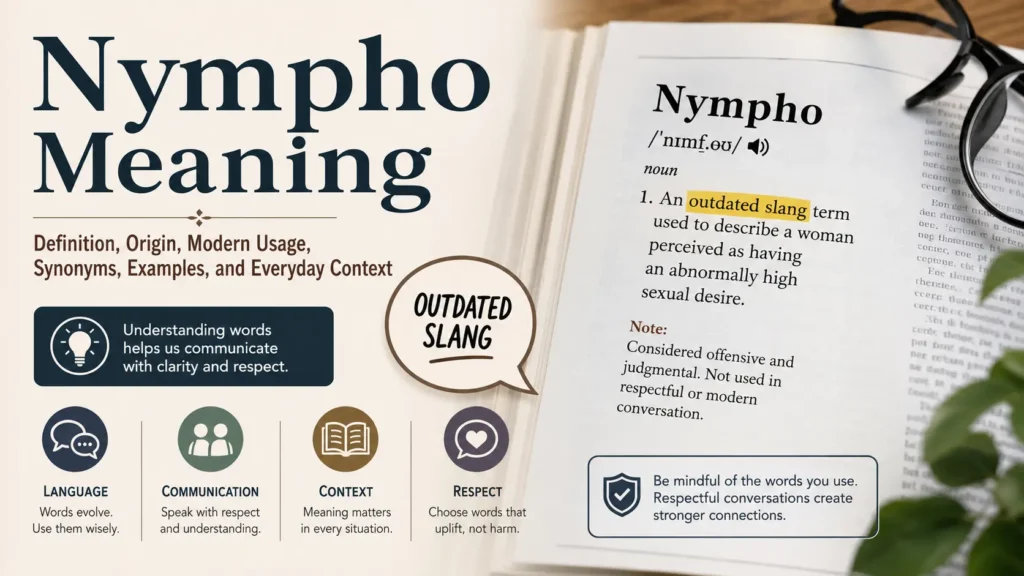
The nympho meaning is an informal slang term traditionally used to describe someone believed to have an unusually high level of sexual desire. Today, the term is widely considered outdated, inaccurate, and often offensive, especially when used to describe women.
The word nympho is commonly seen in movies, TV shows, social media, and casual conversations. It is usually used as a slang abbreviation for nymphomaniac, a term that was once used to describe a woman believed to have an excessive sexual appetite. However, modern medicine and psychology no longer use nymphomania as an official diagnosis, and many people consider both nympho and nymphomaniac to be outdated or disrespectful labels.
Today, the word is most often encountered in informal conversations or popular culture rather than in professional or medical settings. Understanding the nympho meaning also means understanding why the term can be controversial and why more respectful alternatives are generally preferred.
Nympho Meaning at a Glance
| Word | Nympho |
|---|---|
| Pronunciation | NIM-foh |
| Part of Speech | Noun (informal slang) |
| Primary Meaning | A slang term referring to someone believed to have a very high level of sexual desire. |
| Origin | Shortened form of nymphomaniac. |
| Common Contexts | Slang, movies, television, books, and social media |
| Tone | Informal, often offensive or derogatory |
| Example Sentence | The character was unfairly labeled a “nympho” by others. |
What Does Nympho Mean?
Nympho is an informal slang word that traditionally refers to a person, usually a woman, who is believed to have an unusually strong interest in sexual activity.
In modern English, the word is generally viewed as an insulting label rather than a neutral description.
Example:
Using the term “nympho” to judge someone’s personal life can be offensive.
The Origin of the Word Nympho
The word nympho is a shortened form of nymphomaniac.
The older term nymphomania comes from:
- Greek “nymphē”, meaning young woman or bride.
- Greek “mania”, meaning madness or obsession.
Historically, nymphomania was used in medicine, but it is no longer recognized as an official medical diagnosis. Modern healthcare professionals use different, more accurate terminology when discussing concerns about sexual behavior.
Nympho Meaning in Different Contexts
In Everyday Conversations
People may use the word jokingly or as an insult.
Example:
The comment was inappropriate because it labeled someone unfairly.
In Movies and TV Shows
Older films and television series sometimes use the word to describe fictional characters.
Example:
The script included outdated slang that would be considered offensive today.
On Social Media
The word may appear in memes, comments, or jokes, though many users recognize it as disrespectful.
Example:
Many people called out the post for using offensive language.
In Medical Contexts
Modern medicine generally does not use the word nympho.
Instead, healthcare professionals use evidence-based language when discussing sexual health or behaviors.
Why Is the Term Considered Outdated?
Many experts consider the word outdated because:
- It has historically been applied unfairly to women.
- It can shame or stereotype people based on their personal lives.
- It is not a recognized medical diagnosis.
- More respectful and accurate language is preferred today.
Because of this, it is usually best to avoid using the word to describe real people.
Examples of Nympho in Sentences
- The movie used the word as outdated slang.
- Calling someone a nympho can be offensive.
- The character rejected the unfair label.
- Modern writers rarely use the term seriously.
- The joke relied on outdated stereotypes.
- The article explained why the word is controversial.
- Many people consider the expression disrespectful.
- The conversation shifted toward more respectful language.
Synonyms of Nympho
Depending on the context, similar terms include:
- Nymphomaniac (outdated)
- Sex (not always equivalent and should not be used casually)
- Hypersexual person (clinical context only)
- Promiscuous (context-dependent)
- Libertine
- Lothario (typically for a man)
- Womanizer (typically for a man)
- Seducer
- Casanova (for a man, often used figuratively)
- Flirt (not an exact synonym)
Antonyms of Nympho
Depending on the context, opposite ideas may include:
- Celibate
- Abstinent
- Chaste
- Reserved
- Modest
- Self-controlled
- Restrained
- Asexual (not an opposite in every context)
- Uninterested
- Conservative
Nympho vs Hypersexuality
These terms are often confused.
| Nympho | Hypersexuality |
|---|---|
| Informal slang term. | A modern descriptive term used in some clinical discussions. |
| Often considered offensive or outdated. | Neutral terminology when used by professionals. |
| Not a medical diagnosis. | Refers to excessive sexual behaviors or urges in specific clinical contexts. |
Why Is Nympho a Well-Known Word?
The word became widely known through:
- Movies
- Television
- Books
- Celebrity gossip
- Internet slang
- Social media
Although it still appears in popular culture, many people avoid using it because it can be offensive or misleading.
FAQs
What does nympho mean?
Nympho is an informal slang term traditionally used to describe someone believed to have an unusually high level of sexual desire.
Is nympho an offensive word?
Yes. Many people consider it outdated, disrespectful, or offensive, especially when directed at a real person.
Is nympho a medical term?
No. Modern medicine does not use nympho or nymphomania as an official diagnosis.
Where is the word nympho commonly used?
It is mostly found in movies, television, books, social media, and informal conversations.
Should you use the word nympho?
Because it can be offensive or stigmatizing, it is generally better to choose more respectful and accurate language.
How do you pronounce nympho?
It is commonly pronounced NIM-foh.
Conclusion
The nympho meaning refers to an informal slang term that was historically used to describe someone believed to have an unusually strong sexual desire.
Today, the word is widely regarded as outdated, inaccurate, and potentially offensive. Understanding its history and modern usage can help you recognize why it still appears in older media while also explaining why respectful, nonjudgmental language is preferred in contemporary conversations.