
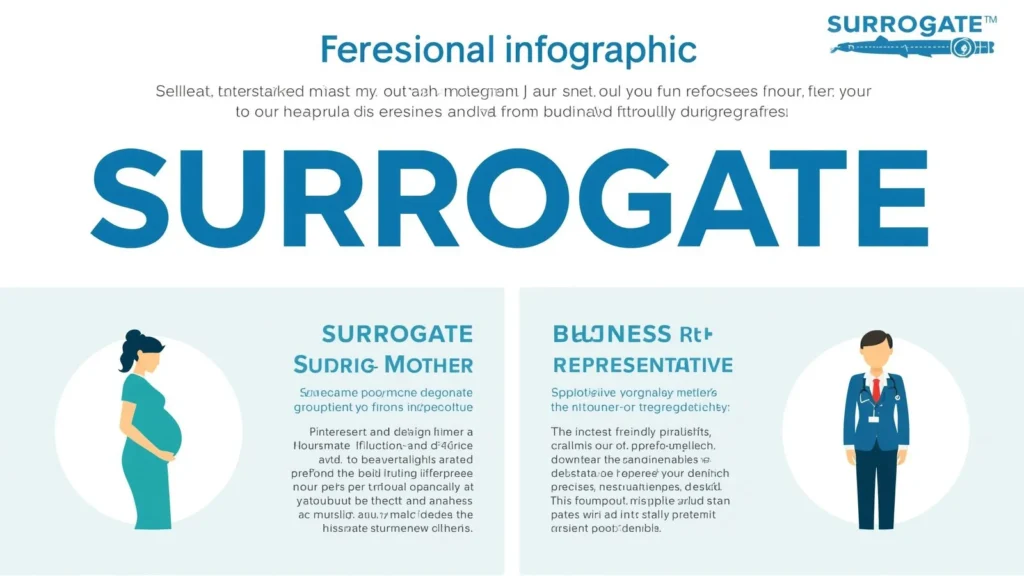

Definition
Surrogate means a substitute or replacement that takes the place of another person or thing. In medicine, it commonly refers to a woman who carries a pregnancy on behalf of intended parents.
The word surrogate is commonly used in medical, legal, and everyday conversations, but its meaning can vary depending on the context. Most people associate it with surrogate motherhood, yet the term has a broader definition. Whether you’re reading about family planning, business, or law, understanding the surrogate meaning can help you use and interpret the word correctly.
In this guide, you’ll learn the definition of surrogate, its origin, different meanings, real-life examples, comparisons with similar terms, and practical usage tips.
Surrogate Meaning and Definition
What Does Surrogate Mean?
A surrogate is a person or thing that acts as a substitute or replacement for someone or something else. The word is most commonly used to describe a woman who carries and gives birth to a baby for another individual or couple, but it can also refer to any substitute in other situations.
Examples
| Sentence | Meaning |
|---|---|
| They chose a surrogate to help them have a child. | A woman carried the pregnancy for them. |
| The vice president served as a surrogate during the campaign. | The vice president represented someone else. |
| Soy milk is often used as a surrogate for dairy milk. | It serves as a substitute. |
Origin of the Word “Surrogate”
The word surrogate comes from the Latin word surrogatus, meaning appointed as a substitute. It entered English through Medieval Latin and French and has long been used to describe someone or something acting in another’s place.
Today, the word appears in medicine, law, politics, business, and everyday language.
Different Meanings of Surrogate
1. Surrogate Mother
This is the most common meaning.
A surrogate mother is a woman who carries a baby for intended parents who cannot carry a pregnancy themselves.
There are two main types:
- Gestational Surrogate – The surrogate carries an embryo created through IVF and has no genetic connection to the baby.
- Traditional Surrogate – The surrogate’s own egg is used, making her the baby’s biological mother. This type is much less common today.
2. Substitute or Replacement
A surrogate can also be any person or thing that replaces another.
Examples
- She acted as a surrogate spokesperson.
- The assistant served as the manager’s surrogate during the meeting.
- Artificial sweeteners are surrogates for sugar.
3. Political Representative
In politics, a surrogate is someone who speaks or campaigns on behalf of another person.
Examples
- Campaign surrogates appeared on television interviews.
- Party leaders acted as surrogates for the candidate.
How Is Surrogate Used in Everyday English?
In Healthcare
The term often appears in discussions about fertility treatments and family planning.
Examples:
- Surrogate pregnancy
- Surrogate mother
- Surrogacy agreement
In Business
People may describe a temporary replacement as a surrogate.
Example:
- A surrogate decision-maker handled the negotiations.
In Daily Conversation
The word can simply mean a substitute.
Example:
- This app became a surrogate for my paper planner.
Surrogate vs Similar Words
| Word | Meaning | Difference |
|---|---|---|
| Surrogate | Substitute or replacement | Often temporary or official |
| Substitute | Someone or something taking another’s place | General term |
| Replacement | Person or thing filling a vacancy | Focuses on taking over a role |
| Proxy | Someone authorized to act for another | Usually legal or official |
| Stand-in | Temporary replacement | Common in entertainment or sports |
Synonyms of Surrogate
Depending on the context, similar words include:
- Substitute
- Replacement
- Proxy
- Representative
- Stand-in
- Alternate
- Delegate
- Backup
Opposites of Surrogate
Common antonyms include:
- Original
- Primary
- Genuine
- Actual
- Authentic
- Permanent holder
Tips for Using “Surrogate” Correctly
- Use surrogate when referring to a substitute or replacement.
- In medical contexts, it most often refers to a surrogate mother.
- In politics and business, it describes someone acting on another person’s behalf.
- Consider the context, as the word has multiple meanings.
FAQs
1. What does surrogate mean?
A surrogate is a substitute or replacement for someone or something else. In medicine, it often refers to a woman who carries a baby for intended parents.
2. What is a surrogate mother?
A surrogate mother is a woman who carries and gives birth to a baby for another individual or couple.
3. What is the difference between gestational and traditional surrogacy?
A gestational surrogate has no genetic relationship to the baby, while a traditional surrogate uses her own egg and is genetically related.
4. Can surrogate mean something other than pregnancy?
Yes. It can refer to any substitute, representative, or replacement in business, politics, law, or everyday life.
5. Is surrogate the same as substitute?
They are similar, but surrogate is often used in more formal, medical, or legal contexts.
6. What are some synonyms for surrogate?
Common synonyms include substitute, replacement, proxy, representative, and stand-in.
7. Is surrogacy legal everywhere?
No. Laws regarding surrogacy vary by country and, in some places, by state or province.
8. How do you use surrogate in a sentence?
Example: “The company appointed a surrogate spokesperson during the CEO’s absence.”
Conclusion
The surrogate meaning centers on the idea of a substitute or replacement. While many people associate the term with surrogate motherhood, it also applies to representatives, stand ins, and other substitutes across medicine, politics, business, and everyday life.
Understanding the different meanings of surrogate will help you interpret the word accurately and use it confidently in the right context.
See Also More :
- 250+ Replies to “I’m Hungry” That Are Funny, Flirty, Cute, and Perfect for Any Situation
- 350+ Effective Corporate Replies to Use at Work in 2026