

Quick Answer
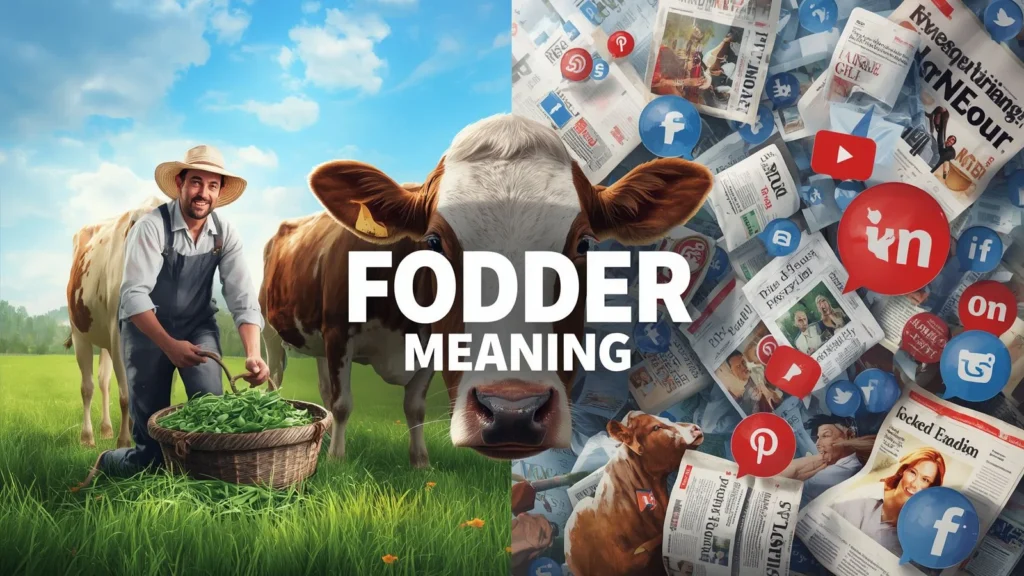
The fodder meaning is food, especially dried grass, hay, or feed given to livestock such as cows, horses, sheep, and goats. In a figurative sense, fodder refers to material, information, or people used for a particular purpose, often to support discussions, stories, criticism, or entertainment.
The word fodder is commonly associated with food for farm animals, but its meaning extends far beyond agriculture. In everyday English, fodder is also used figuratively to describe material, ideas, or people that are used for a particular purpose, often in discussions about news, entertainment, politics, or social media.
Depending on the context, the word can have either a literal or a metaphorical meaning. Understanding the fodder meaning helps you use it correctly in conversations, writing, and professional communication. This guide explains the complete meaning of fodder, its origin, different uses, examples, synonyms, and common expressions.
Fodder Meaning at a Glance
| Word | Fodder |
|---|---|
| Pronunciation | FOD-er |
| Part of Speech | Noun |
| Primary Meaning | Food given to livestock, especially hay, straw, or animal feed. |
| Figurative Meaning | Material, ideas, or people used for a specific purpose, discussion, or criticism. |
| Common Contexts | Farming, agriculture, media, politics, journalism, sports, and everyday conversations |
| Synonyms | Feed, forage, hay, material, fuel, source |
| Antonyms | Starvation, shortage, scarcity |
| Example Sentence | The dry grass was stored as fodder for the cattle during winter. |
What Does Fodder Mean?
The word fodder has two main meanings.
Food for Livestock
The original meaning of fodder is food prepared for farm animals. It includes hay, straw, silage, grains, and other crops grown specifically to feed livestock.
Example:
The farmer stored enough fodder to feed the cattle throughout the winter.
Material Used for a Purpose
In modern English, fodder is often used figuratively to describe information, events, or people that become the basis for news stories, jokes, debates, or criticism.
Example:
The celebrity’s latest interview became fodder for social media discussions.
The Origin of the Word Fodder
The word fodder comes from the Old English word fōdor, which meant “food” or “nourishment.” It has Germanic roots and has been used for centuries to describe feed for animals.
As the English language evolved, the word developed a figurative meaning. Today, it is commonly used to describe anything that provides material for discussion, entertainment, or analysis.
Fodder Meaning in Different Contexts
Agriculture
In farming, fodder refers to crops and feed grown specifically for livestock.
Example:
Fresh green fodder improves the health of dairy cows.
Media
Journalists often use fodder to describe information that becomes news content.
Example:
The leaked documents provided plenty of fodder for reporters.
Politics
Political debates and controversies often become fodder for public discussion.
Example:
The speech became fodder for political commentators.
Entertainment
Movies, television shows, and celebrity stories frequently become fodder for online conversations.
Example:
The award ceremony became fodder for internet memes.
Sports
Sports analysts use statistics and performances as fodder for pre-game and post-game discussions.
Example:
The team’s surprising defeat became fodder for endless debate.
Types of Fodder
Different kinds of fodder are used in agriculture.
Hay
Dried grass stored for feeding livestock.
Silage
Fermented green crops preserved for animal feed.
Straw
Dry stalks from cereal crops used as feed and bedding.
Green Fodder
Fresh grasses and plants fed directly to animals.
Grain Feed
Corn, oats, barley, and similar grains used to supplement animal diets.
Common Phrases with Fodder
Media Fodder
Information that attracts public attention and news coverage.
Example:
The incident quickly became media fodder.
Political Fodder
Events or statements used in political debates.
Example:
The policy provided political fodder for the opposition.
Conversation Fodder
Interesting topics that keep conversations going.
Example:
The documentary gave us plenty of conversation fodder.
Cannon Fodder
A phrase referring to soldiers who are considered expendable in battle. Today, it is also used figuratively for people who are treated as easily replaceable.
Example:
The workers felt like cannon fodder during the difficult project.
Examples of Fodder in Sentences
- The farmer bought extra fodder before winter arrived.
- Fresh fodder keeps livestock healthy and productive.
- The scandal became fodder for television talk shows.
- The report provided valuable fodder for researchers.
- The interview created plenty of fodder for social media.
- The politician’s comments became newspaper fodder.
- Students used the article as fodder for classroom discussions.
- The team’s poor performance became fodder for sports analysts.
Synonyms of Fodder
Depending on the context, similar words include:
- Feed
- Forage
- Hay
- Silage
- Straw
- Grain
- Material
- Source
- Fuel
- Resource
Antonyms of Fodder
Words with opposite meanings include:
- Starvation
- Scarcity
- Shortage
- Deprivation
- Hunger
Why Is the Word Fodder Still Common Today?
Although its agricultural meaning remains important, fodder is now frequently used in journalism, politics, entertainment, and online discussions. It is a simple way to describe information or events that become the basis for conversations, news reports, jokes, or criticism.
Because of its versatility, the word continues to appear in newspapers, books, television programs, and social media posts.
FAQs
What does fodder mean?
Fodder means food given to livestock, such as hay or grass. It can also refer to material or information used for discussion, criticism, or entertainment.
Is fodder only used in farming?
No. While its original meaning relates to animal feed, it is also widely used figuratively in media, politics, sports, and everyday conversations.
What is the difference between fodder and forage?
Fodder is feed that is cut and given to animals, while forage usually refers to plants that animals graze on directly in fields.
What does media fodder mean?
Media fodder refers to information or events that attract attention and become the subject of news reports or public discussion.
What does cannon fodder mean?
Cannon fodder originally referred to soldiers considered expendable in war. Today, it can describe people who are treated as easily replaceable.
Can fodder be used in everyday conversations?
Yes. It is often used to describe interesting topics, stories, or events that provide material for conversations or debates.
Conclusion
The fodder meaning includes both its traditional agricultural definition and its modern figurative use. While it originally referred to food prepared for livestock, today it also describes information, events, or ideas that become the basis for discussion, news, or entertainment.
you encounter the word in farming, journalism, politics, or casual conversation, understanding its different meanings makes it easier to interpret and use correctly. Its flexibility and long history have made fodder a valuable word in both everyday and professional English.
See Also More :
- 350+ Best Instagram Comment Replies to Boost Engagement in 2026
- 355+ Charming Ways to Respond to Being Called a Baddie In 2026