
Quick Answer
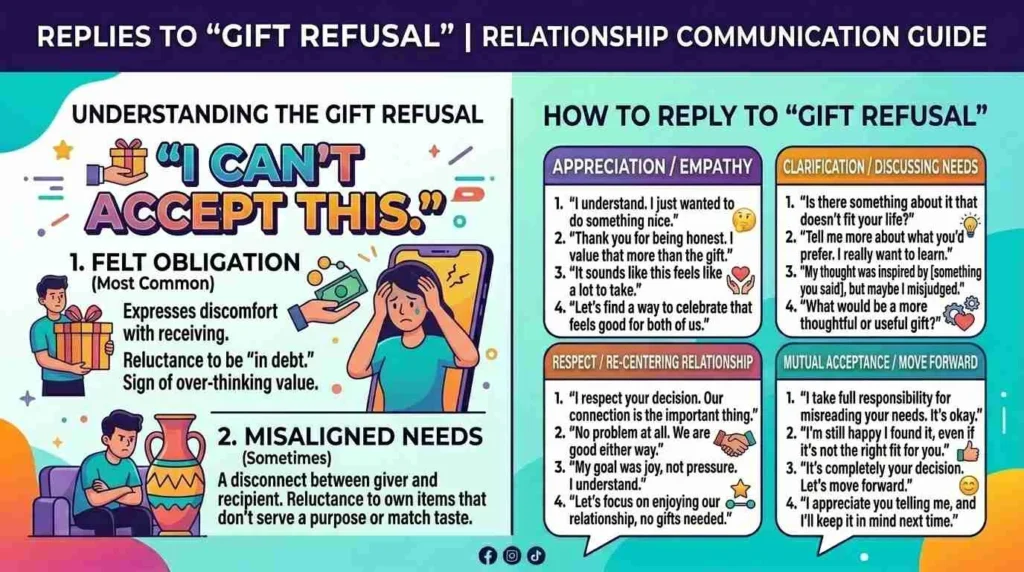
When someone refuses your gift, the best response is respectful, understanding, and pressure free. A thoughtful reply helps avoid awkwardness and shows that your kindness was genuine.
Top replies include “No worries at all, I completely understand.”, “The thought was what mattered to me.”, “I appreciate your honesty.”, “Please do not feel bad about it.”, “Your friendship means more than the gift anyway.”
Giving a gift is usually a happy moment. You spend time choosing something meaningful, wrap it with care, and look forward to seeing the other person’s reaction. However, sometimes things do not go as expected. Instead of accepting your present, the person politely refuses it.
At first, this can feel surprising, disappointing, or even a little awkward. You might wonder if they did not like the gift, if you made them uncomfortable, or if you should insist that they take it. In reality, people refuse gifts for many reasons. Some have personal policies about accepting presents. Others feel uncomfortable receiving expensive items. Some simply do not want anyone spending money on them.
Knowing what to say when someone refuses your gift can help you handle the situation with grace and confidence. The right response keeps the interaction positive and shows that your kindness was never conditional on them accepting the gift.
Whether the situation involves a friend, coworker, teacher, neighbor, family member, or crush, these replies will help you respond naturally while preserving the relationship.
Polite Replies When Someone Refuses Your Gift
“No worries at all, I completely understand.”
Example: When they politely decline your present.
Meaning: You respect their decision.
“That is perfectly okay.”
Example: When you want to avoid awkwardness.
Meaning: You are accepting their choice.
“Please do not feel bad about it.”
Example: When they seem guilty.
Meaning: You reassure them.
“I appreciate your honesty.”
Example: When they explain why they cannot accept it.
Meaning: You value their openness.
“I understand completely.”
Example: When they have a personal rule about gifts.
Meaning: You respect boundaries.
“No pressure whatsoever.”
Example: When they hesitate.
Meaning: You remove expectations.
“Thank you for being straightforward.”
Example: When they are direct about refusing.
Meaning: You appreciate clarity.
“It is absolutely fine.”
Example: When they worry about hurting your feelings.
Meaning: You reassure them.
“I respect your decision.”
Example: When they firmly decline.
Meaning: You show maturity.
“There is no problem at all.”
Example: When easing tension.
Meaning: You want them comfortable.
“I understand where you are coming from.”
Example: When they explain their reasoning.
Meaning: You acknowledge their perspective.
“You do not owe me an explanation.”
Example: When they seem uncomfortable.
Meaning: You remove pressure.
“Thank you for letting me know.”
Example: When they politely decline.
Meaning: You appreciate communication.
“That is completely your choice.”
Example: When respecting boundaries.
Meaning: You support their decision.
“I appreciate your honesty and kindness.”
Example: When they refuse respectfully.
Meaning: You value their approach.
Kind Replies That Show Understanding
“The thought was what mattered to me.”
Example: When they decline but appreciate the gesture.
Meaning: Your intention was more important than the outcome.
“I just wanted to do something nice for you.”
Example: When explaining your motive.
Meaning: Your kindness was genuine.
“I hope you know it came from a good place.”
Example: When clarifying your intention.
Meaning: You acted out of care.
“I completely understand your reasons.”
Example: When they explain why they declined.
Meaning: You respect their perspective.
“Please do not worry about disappointing me.”
Example: When they seem apologetic.
Meaning: You reassure them.
“I am glad you felt comfortable being honest.”
Example: When they openly refuse.
Meaning: You appreciate trust.
“Your comfort matters more than the gift.”
Example: When they seem uneasy.
Meaning: Their feelings come first.
“I respect your boundaries.”
Example: When they have personal rules.
Meaning: You value their choices.
“It was simply a gesture of appreciation.”
Example: When explaining the gift.
Meaning: No expectations were attached.
“I hope it did not make you uncomfortable.”
Example: When checking on their feelings.
Meaning: You care about their comfort.
“I appreciate your perspective.”
Example: When they explain their reasons.
Meaning: You acknowledge their viewpoint.
“Thank you for being respectful about it.”
Example: When they decline kindly.
Meaning: You appreciate their courtesy.
“Your honesty means a lot.”
Example: When they communicate clearly.
Meaning: You value openness.
“I understand and respect your choice.”
Example: When ending the conversation positively.
Meaning: Mature acceptance.
“There are no hard feelings at all.”
Example: When preventing awkwardness.
Meaning: The relationship remains positive.
Gracious Replies That Keep Things Positive
“I am just happy I thought of you.”
Example: When focusing on the gesture.
Meaning: The intention matters most.
“Your friendship means more than any gift.”
Example: When talking to a close friend.
Meaning: The relationship is more important.
“I appreciate you regardless.”
Example: When maintaining positivity.
Meaning: The gift does not define your feelings.
“The gesture was enough for me.”
Example: When keeping things light.
Meaning: Giving was the reward.
“No worries, I completely understand.”
Example: When ending gracefully.
Meaning: Respectful acceptance.
“I am glad I had the chance to offer.”
Example: When remaining positive.
Meaning: The effort itself mattered.
“You never have to accept anything out of obligation.”
Example: When removing pressure.
Meaning: Their choice is respected.
“I simply wanted to show appreciation.”
Example: When explaining your intention.
Meaning: The gesture came from gratitude.
“I hope you know it was given with good intentions.”
Example: When clarifying.
Meaning: Your motives were sincere.
“I respect your decision completely.”
Example: When concluding the discussion.
Meaning: Mature understanding.
“There is no need to feel awkward.”
Example: When tension appears.
Meaning: You want comfort.
“Everything is perfectly fine.”
Example: When reassuring them.
Meaning: No harm done.
“I appreciate your kindness.”
Example: When they decline politely.
Meaning: You recognize their courtesy.
“I understand your reasons.”
Example: When they explain.
Meaning: You acknowledge them.
“Thank you for being honest with me.”
Example: When they communicate openly.
Meaning: You value honesty.
Short Replies for Awkward Situations
“No worries.”
Example: Quick response.
Meaning: You are okay with it.
“That is fine.”
Example: Casual interaction.
Meaning: Acceptance.
“I understand.”
Example: Simple acknowledgment.
Meaning: Respect.
“All good.”
Example: Informal setting.
Meaning: Positive acceptance.
“No problem at all.”
Example: Friendly response.
Meaning: Reassurance.
“Absolutely okay.”
Example: Quick comfort.
Meaning: Understanding.
“I appreciate your honesty.”
Example: Direct refusal.
Meaning: Gratitude.
“That is completely fine.”
Example: Avoiding awkwardness.
Meaning: Acceptance.
“No pressure.”
Example: Removing obligation.
Meaning: Comfort.
“Understood.”
Example: Formal tone.
Meaning: Respect.
“I get it.”
Example: Casual conversation.
Meaning: Understanding.
“It happens.”
Example: Lighthearted response.
Meaning: Normalization.
“Thanks for letting me know.”
Example: Clear communication.
Meaning: Appreciation.
“Fair enough.”
Example: Casual response.
Meaning: Acceptance.
“No hard feelings.”
Example: Closing positively.
Meaning: Relationship remains good.
Humble Replies When a Gift Is Declined
“I completely understand your decision.”
Example: Respectful conversation.
Meaning: Humility.
“I never wanted you to feel obligated.”
Example: When they hesitate.
Meaning: You remove pressure.
“It was simply a small gesture.”
Example: When explaining.
Meaning: The gift was not a big deal.
“I appreciate your honesty.”
Example: Direct communication.
Meaning: Respect.
“Please do what feels right for you.”
Example: When they are unsure.
Meaning: Their comfort matters.
“I respect your feelings.”
Example: Personal reasons.
Meaning: Understanding.
“I never expected anything in return.”
Example: Clarifying intentions.
Meaning: Pure generosity.
“Thank you for being honest.”
Example: Open discussion.
Meaning: Appreciation.
“I completely respect that.”
Example: Firm refusal.
Meaning: Acceptance.
“Your decision makes sense.”
Example: When reasons are valid.
Meaning: Understanding.
“I value your comfort.”
Example: Gift makes them uneasy.
Meaning: Their feelings come first.
“There is no pressure from me.”
Example: Removing obligation.
Meaning: Freedom of choice.
“I appreciate your perspective.”
Example: Different viewpoints.
Meaning: Respect.
“I understand your concerns.”
Example: Expensive gift refusal.
Meaning: Empathy.
“Thank you for sharing your thoughts.”
Example: Honest conversation.
Meaning: Appreciation.
Friendly Replies for Friends Who Refuse Gifts
“That is okay, your friendship is enough.”
Example: Close friendship.
Meaning: Relationship matters most.
“I just wanted to make you smile.”
Example: Friendly gesture.
Meaning: Good intentions.
“No worries, I get it.”
Example: Casual friend conversation.
Meaning: Understanding.
“You are still stuck with me as a friend.”
Example: Lighthearted moment.
Meaning: The friendship remains strong.
“The thought counts anyway.”
Example: When gift is declined.
Meaning: Intention matters.
“I appreciate you regardless.”
Example: Friendship discussion.
Meaning: No conditions attached.
“You do not have to accept anything to make me happy.”
Example: Reassuring a friend.
Meaning: Their comfort matters.
“It was just a little something.”
Example: Small gift.
Meaning: No big expectations.
“No pressure at all.”
Example: Friendly interaction.
Meaning: Freedom of choice.
“I completely understand.”
Example: Honest explanation.
Meaning: Respect.
“I am just glad we are friends.”
Example: Close relationship.
Meaning: Friendship comes first.
“That is perfectly okay.”
Example: Casual refusal.
Meaning: Acceptance.
“I appreciate your honesty.”
Example: Open communication.
Meaning: Trust.
“I wanted to do something nice.”
Example: Explaining motive.
Meaning: Genuine kindness.
“No hard feelings whatsoever.”
Example: Ending positively.
Meaning: Everything is good.
Professional Replies When a Coworker Refuses a Gift
“I completely understand and respect company policies.”
Example: Workplace restrictions.
Meaning: Professionalism.
“Thank you for letting me know.”
Example: Office environment.
Meaning: Respect.
“No problem at all.”
Example: Professional setting.
Meaning: Understanding.
“I appreciate your transparency.”
Example: Honest refusal.
Meaning: Professional respect.
“Please do not feel uncomfortable.”
Example: Workplace conversation.
Meaning: Reassurance.
“I understand your position.”
Example: Policy related refusal.
Meaning: Acknowledgment.
“Thank you for explaining.”
Example: Formal discussion.
Meaning: Appreciation.
“I respect your decision completely.”
Example: Professional interaction.
Meaning: Maturity.
“No worries whatsoever.”
Example: Casual office tone.
Meaning: Acceptance.
“It was simply a gesture of appreciation.”
Example: Clarifying intention.
Meaning: No expectations.
“I value our working relationship.”
Example: Professional focus.
Meaning: Relationship matters.
“Your comfort comes first.”
Example: Workplace etiquette.
Meaning: Respect.
“I appreciate your honesty.”
Example: Direct communication.
Meaning: Trust.
“That makes perfect sense.”
Example: Understanding policy.
Meaning: Agreement.
“Thank you for being straightforward.”
Example: Clear explanation.
Meaning: Appreciation.
Funny Replies When Someone Refuses Your Gift
“Well, now I have a gift for myself.”
Example: Lighthearted situation.
Meaning: You keep things playful.
“Looks like I know who is getting an extra present.”
Example: Casual joke.
Meaning: You lighten the mood.
“I tried my best.”
Example: Friendly conversation.
Meaning: Playful acceptance.
“More chocolate for me then.”
Example: Food gift refusal.
Meaning: Humor.
“You are making my shopping trip feel rejected.”
Example: Light teasing.
Meaning: Friendly joke.
“That gift and I will recover eventually.”
Example: Casual humor.
Meaning: You joke about disappointment.
“The gift is taking this personally.”
Example: Playful atmosphere.
Meaning: Personifying the gift.
“Guess I will keep the wrapping paper too.”
Example: Friendly refusal.
Meaning: Light humor.
“I thought it was adorable.”
Example: Gift discussion.
Meaning: Gentle teasing.
“Well, my gift tried its best.”
Example: Casual interaction.
Meaning: Humor.
“Back to the gift drawer it goes.”
Example: Rejected present.
Meaning: Lighthearted acceptance.
“Looks like I owe myself a thank you card.”
Example: Funny moment.
Meaning: Self directed humor.
“This gift had dreams.”
Example: Casual joke.
Meaning: Playful exaggeration.
“I promise it will not take revenge.”
Example: Friendly teasing.
Meaning: Humor.
“At least I get to keep the receipt.”
Example: Practical joke.
Meaning: Positive spin.
Thoughtful Replies That Preserve the Relationship
“What matters is that I thought of you.”
Example: Close relationship.
Meaning: The gesture counts.
“I value our connection more than the gift.”
Example: Meaningful friendship.
Meaning: Relationship first.
“The gift was just a symbol of appreciation.”
Example: Clarifying intentions.
Meaning: Sentiment matters.
“Please do not let this feel awkward.”
Example: Tense moment.
Meaning: Reassurance.
“I am grateful for your honesty.”
Example: Direct conversation.
Meaning: Respect.
“I understand and appreciate your perspective.”
Example: Honest explanation.
Meaning: Empathy.
“Nothing changes between us.”
Example: Concerned friend.
Meaning: Relationship remains intact.
“I simply wanted to express appreciation.”
Example: Explaining your gift.
Meaning: Positive intentions.
“Your comfort is important to me.”
Example: Sensitive situation.
Meaning: Respect.
“I respect your choice completely.”
Example: Firm refusal.
Meaning: Acceptance.
“I appreciate your openness.”
Example: Honest discussion.
Meaning: Trust.
“Please know there are no expectations.”
Example: Gift refusal.
Meaning: Freedom from obligation.
“I am happy we can be honest with each other.”
Example: Strong relationship.
Meaning: Appreciation of trust.
“I understand your decision.”
Example: Mature conversation.
Meaning: Respect.
“Thank you for handling it kindly.”
Example: Polite refusal.
Meaning: Gratitude.
Best Replies for Any Situation
“No worries at all.”
Example: Universal response.
Meaning: Acceptance.
“I completely understand.”
Example: Any situation.
Meaning: Respect.
“Thank you for your honesty.”
Example: Open conversation.
Meaning: Appreciation.
“Please do not feel bad.”
Example: Awkward moment.
Meaning: Reassurance.
“I respect your decision.”
Example: Firm refusal.
Meaning: Maturity.
“Your comfort comes first.”
Example: Sensitive situation.
Meaning: Care.
“That is perfectly okay.”
Example: General response.
Meaning: Understanding.
“The thought was what mattered to me.”
Example: Meaningful gift.
Meaning: Intention counts.
“No hard feelings whatsoever.”
Example: Preserving positivity.
Meaning: Relationship remains good.
“I appreciate your perspective.”
Example: Honest explanation.
Meaning: Respect.
“I just wanted to do something nice.”
Example: Explaining motive.
Meaning: Kindness.
“Everything is completely fine.”
Example: Reassuring someone.
Meaning: No issue.
“I appreciate your openness.”
Example: Honest discussion.
Meaning: Trust.
“Thank you for being respectful.”
Example: Polite refusal.
Meaning: Appreciation.
“I am glad we can be honest with each other.”
Example: Close relationship.
Meaning: Mutual trust.
FAQs
What should I say when someone refuses my gift?
A respectful response like “No worries, I completely understand” works well in most situations.
Should I insist after someone refuses a gift?
Usually no. Respecting their decision is often the most considerate choice.
Why do people refuse gifts?
Some people have personal boundaries, workplace policies, financial concerns, or simply feel uncomfortable accepting gifts.
Is it rude to refuse a gift?
Not necessarily. Many people decline gifts politely for personal or professional reasons.
How can I avoid making the situation awkward?
Respond calmly, avoid pressure, and focus on the relationship rather than the gift itself.
Conclusion
When someone refuses your gift, it does not mean your kindness was rejected. In many cases, the person appreciates the gesture even if they cannot accept the present itself. The best response is one that shows understanding, respect, and emotional maturity. you choose a polite, thoughtful, humorous, or professional reply, your reaction can make the situation comfortable for everyone involved. Remember that genuine generosity is about the intention behind the gift, not whether it is accepted. Save these replies, use them when needed, and handle every gift giving situation with confidence and grace.