
Quick Answer
Being called a copycat can feel annoying, awkward, or even unfair. The best response depends on the situation. Sometimes a funny comeback works best, while other times a calm and confident reply is the smarter choice.
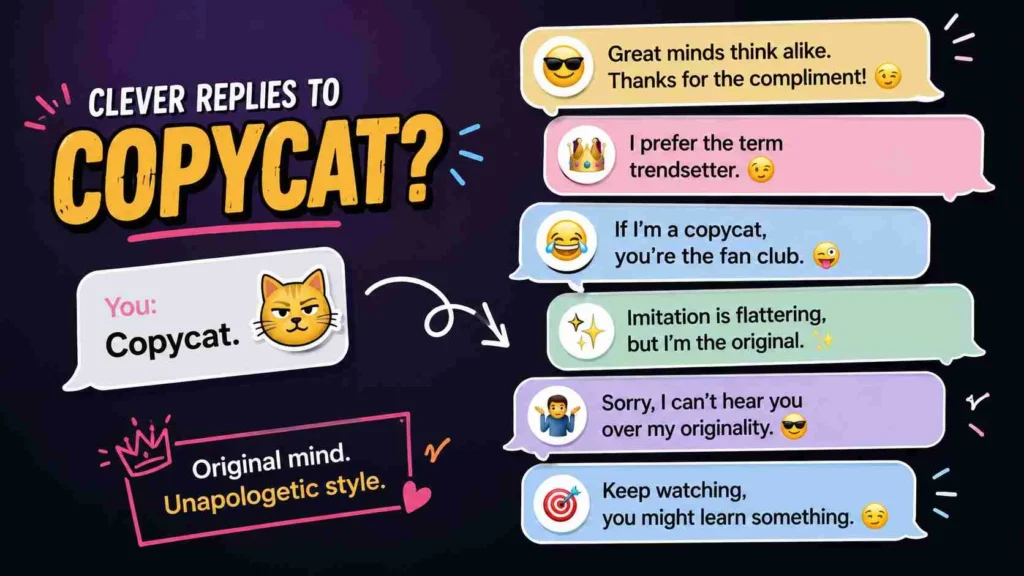
Top replies include “Great minds think alike.”, “I call it inspiration, not imitation.”, “Trust me, I bring my own style.”, “That was not the plan, but okay.”, “Funny, I was thinking the same thing about you.”
Few accusations are as frustrating as being called a copycat.
Maybe you bought a similar outfit as a friend. Maybe you posted a trend on social media after someone else did. Perhaps you joined the same club, chose a similar hairstyle, or had an idea that happened to overlap with someone else’s. Suddenly, someone throws out the word “copycat.”
Sometimes it is said as a joke. Sometimes it is playful teasing between friends. Other times, it can feel like a genuine insult meant to make you look unoriginal.
The good news is that you do not have to get defensive. The right reply can shut down the accusation, keep the conversation light, or even turn the situation in your favor. Whether you want to be funny, witty, confident, sarcastic, or mature, these replies to being called a copycat will help you handle the situation like a pro.
Funny Replies to Being Called a Copycat
“I prefer the term trend follower.”
Example: When friends are joking around.
Meaning: You respond with humor instead of taking it seriously.
“At least I have good taste.”
Example: When someone points out similarities.
Meaning: You turn the comment into a compliment.
“I learned from the best.”
Example: When a friend jokingly calls you a copycat.
Meaning: You playfully give them credit.
“That sounds better than being a trendsetter who failed.”
Example: Friendly banter.
Meaning: You respond with light humor.
“Coincidence is working overtime today.”
Example: When similarities happen naturally.
Meaning: You joke about the situation.
“I call it borrowing inspiration.”
Example: Casual conversation.
Meaning: You make the accusation sound harmless.
“Do I at least get extra credit?”
Example: School or workplace joke.
Meaning: You keep things playful.
“I did not know you patented that.”
Example: When someone acts possessive.
Meaning: You humorously challenge the claim.
“I am just following the winning formula.”
Example: When they have good style.
Meaning: You turn it into praise.
“Great minds shop in the same places.”
Example: Similar outfits.
Meaning: Shared taste is normal.
“You should be honored.”
Example: Close friends teasing.
Meaning: Playful confidence.
“At least I copied something good.”
Example: Casual joke.
Meaning: You compliment them indirectly.
“I thought we were both copying the internet.”
Example: Social media trend.
Meaning: Trends belong to everyone.
“Looks like we both have excellent taste.”
Example: Similar choices.
Meaning: You make it positive.
“I promise I did not study your every move.”
Example: Playful accusation.
Meaning: You make light of it.
Clever Replies to Being Called a Copycat
“Inspiration and imitation are not the same thing.”
Example: When someone is serious.
Meaning: You explain the difference calmly.
“There is room for more than one person to like something.”
Example: Similar interests.
Meaning: Shared preferences are normal.
“Ideas travel fast these days.”
Example: Online trends.
Meaning: Similar ideas happen naturally.
“Originality is often a remix.”
Example: Creative discussions.
Meaning: Most ideas build on existing ones.
“Two people can arrive at the same idea independently.”
Example: School or work projects.
Meaning: Similar thinking is possible.
“Having similar taste is not a crime.”
Example: Fashion or hobbies.
Meaning: Shared interests are acceptable.
“I am inspired, not copied.”
Example: Creative settings.
Meaning: You acknowledge influence.
“Nobody owns a hairstyle.”
Example: Appearance related comment.
Meaning: Personal choices are universal.
“I see it as appreciation.”
Example: When someone feels copied.
Meaning: You frame it positively.
“The world would be boring if everyone had completely different ideas.”
Example: General discussion.
Meaning: Similarity is natural.
“I think influence is part of creativity.”
Example: Artistic conversation.
Meaning: Creative people inspire each other.
“Common interests create common choices.”
Example: Friends with similar tastes.
Meaning: Similarity makes sense.
“Sometimes people simply like the same things.”
Example: Casual accusation.
meaning: There is no deeper meaning.
“I am adding my own twist to it.”
Example: Fashion or content creation.
Meaning: You still bring originality.
“Parallel thinking exists.”
Example: Shared idea.
Meaning: Similar thoughts can happen naturally.
Confident Replies to Being Called a Copycat
“I am comfortable with my choices.”
Example: When someone criticizes you.
Meaning: You are secure in yourself.
“Think whatever you want.”
Example: Persistent accusation.
Meaning: Their opinion does not control you.
“I know who I am.”
Example: Personal criticism.
Meaning: Strong self confidence.
“I am not trying to compete with anyone.”
Example: Social comparison.
Meaning: You stay focused on yourself.
“I like it, so I chose it.”
Example: Fashion or hobbies.
Meaning: Your decisions are your own.
“I do not need validation for my choices.”
Example: Judgmental comments.
Meaning: Confidence.
“Your opinion is noted.”
Example: When someone is rude.
Meaning: Calm confidence.
“I am doing what works for me.”
Example: Lifestyle choices.
Meaning: Personal independence.
“That does not bother me.”
Example: Teasing comments.
Meaning: You remain unfazed.
“I have my own identity.”
Example: Serious accusation.
Meaning: You reject the label.
“People can like the same things.”
Example: Similar tastes.
Meaning: Shared interests are normal.
“I am not worried about comparisons.”
Example: Competitive situations.
Meaning: Self assurance.
“I am focused on myself.”
Example: Drama avoidance.
Meaning: Confidence.
“I stand by my decision.”
Example: Criticism.
Meaning: Conviction.
“You are entitled to your opinion.”
Example: Mature response.
Meaning: Respectful confidence.
Sarcastic Replies to Being Called a Copycat
“Wow, I did not know you invented that.”
Example: Someone acts possessive.
Meaning: Light sarcasm.
“Should I pay royalties too?”
Example: Fashion or trends.
Meaning: Playful mockery.
“I forgot you own that idea.”
Example: Shared interests.
Meaning: Sarcastic pushback.
“Thanks for noticing me.”
Example: Dramatic accusation.
Meaning: Teasing response.
“You caught me, detective.”
Example: Joke situation.
Meaning: Mock seriousness.
“I guess everything revolves around you.”
Example: Overly dramatic accuser.
Meaning: Sarcasm.
“Let me know what I am allowed to like next.”
Example: Judgmental comment.
Meaning: Playful challenge.
“Should I submit a permission request first?”
Example: Similar choice.
Meaning: Sarcastic humor.
“I did not realize there was an application process.”
Example: Trend accusation.
Meaning: Mocking the claim.
“You must be exhausted from monitoring everyone.”
Example: Frequent accusations.
Meaning: Sarcasm.
“I will try harder to be different tomorrow.”
Example: Minor similarity.
Meaning: Playful exaggeration.
“Breaking news, two people like the same thing.”
Example: Shared interests.
Meaning: Mock surprise.
“Call the originality police.”
Example: Joke situation.
Meaning: Funny sarcasm.
“This sounds like a very serious investigation.”
Example: Dramatic accusation.
Meaning: Mock seriousness.
“I appreciate your concern.”
Example: Petty comments.
Meaning: Dry sarcasm.
Polite Replies to Being Called a Copycat
“That was not my intention.”
Example: Genuine misunderstanding.
Meaning: You clarify respectfully.
“I can see why you might think that.”
Example: Similar choices.
Meaning: Understanding.
“We just happen to have similar tastes.”
Example: Shared interests.
Meaning: Calm explanation.
“I respect your opinion.”
Example: Friendly disagreement.
Meaning: Maturity.
“I honestly did not realize.”
Example: Accidental similarity.
Meaning: Clarification.
“It was not meant that way.”
Example: Hurt feelings.
Meaning: Reassurance.
“I chose it because I liked it.”
Example: Fashion or hobbies.
Meaning: Honest explanation.
“I appreciate your perspective.”
Example: Calm discussion.
Meaning: Respect.
“I was not trying to copy anyone.”
Example: Direct accusation.
Meaning: Clarification.
“Thanks for sharing your thoughts.”
Example: Mature conversation.
Meaning: Professional response.
“We can agree to disagree.”
Example: Ongoing debate.
Meaning: Peaceful resolution.
“I understand your concern.”
Example: Sensitive situation.
Meaning: Empathy.
“I think it is just a coincidence.”
Example: Similar ideas.
Meaning: Explanation.
“No offense was intended.”
Example: Hurt feelings.
Meaning: Respect.
“I hope there are no hard feelings.”
Example: Friendship situation.
Meaning: Maintaining harmony.
Chill And Casual Replies
“Okay, if you say so.”
Example: Minor teasing.
Meaning: You are not bothered.
“Sure.”
Example: Casual situation.
Meaning: Minimal reaction.
“Whatever works.”
Example: Friendly banter.
Meaning: Relaxed attitude.
“That is one way to look at it.”
Example: Different opinions.
Meaning: Neutral response.
“Cool story.”
Example: Playful teasing.
Meaning: You are not taking it seriously.
“Alright then.”
Example: Casual conversation.
Meaning: Indifference.
“Interesting take.”
Example: Social discussion.
Meaning: Calm disagreement.
“You do you.”
Example: Friendly argument.
Meaning: Independence.
“Fair enough.”
Example: Minor disagreement.
Meaning: Acceptance.
“Noted.”
Example: Short reply.
Meaning: You heard them.
“Maybe.”
Example: Playful uncertainty.
Meaning: You avoid drama.
“Could be.”
Example: Casual response.
Meaning: Indifference.
“That is your opinion.”
Example: Judgmental comment.
Meaning: Neutral confidence.
“If that makes you happy.”
Example: Persistent teasing.
Meaning: Calm dismissal.
“Moving on.”
Example: End of discussion.
Meaning: You are done talking about it.
Funny Replies for Friends
“You inspired me, what can I say?”
Example: Friendly teasing.
Meaning: Playful compliment.
“I learned from a professional.”
Example: Best friend joke.
Meaning: Friendly humor.
“I wanted to be cool too.”
Example: Similar trend.
Meaning: Self aware joke.
“You make copying look fun.”
Example: Casual banter.
Meaning: Lighthearted teasing.
“I guess your influence is growing.”
Example: Friend group.
Meaning: Playful praise.
“I am your biggest fan.”
Example: Joke conversation.
Meaning: Exaggerated humor.
“Can I get an autograph?”
Example: Sarcastic friendship joke.
Meaning: Making fun of the accusation.
“You should feel honored.”
Example: Close friends.
Meaning: Playful confidence.
“I clearly have excellent role models.”
Example: Similar choices.
Meaning: Friendly compliment.
“You are welcome.”
Example: Random accusation.
Meaning: Funny confidence.
“I was waiting for you to notice.”
Example: Joke situation.
Meaning: Playful teasing.
“We are basically twins now.”
Example: Matching outfits.
Meaning: Humor.
“It is called friendship.”
Example: Similar interests.
Meaning: Shared influence.
“I cannot help having good taste.”
Example: Matching purchases.
Meaning: Lighthearted confidence.
“At least I picked the right person.”
Example: Friendly teasing.
Meaning: Compliment disguised as a joke.
Mature Replies for Serious Situations
“I understand why you feel that way.”
Example: Genuine concern.
Meaning: Empathy.
“That was never my intention.”
Example: Misunderstanding.
Meaning: Clarification.
“I respect your feelings.”
Example: Friendship conflict.
Meaning: Maturity.
“I would rather focus on understanding each other.”
Example: Serious discussion.
Meaning: Resolution.
“I value our relationship more than this disagreement.”
Example: Friendship issue.
Meaning: Prioritizing connection.
“Let us talk about it calmly.”
Example: Emotional situation.
Meaning: Communication.
“I appreciate your honesty.”
Example: Difficult conversation.
Meaning: Respect.
“I think there may be a misunderstanding.”
Example: Conflict.
Meaning: Clarification.
“I am happy to explain my perspective.”
Example: Serious accusation.
Meaning: Openness.
“I never intended to make you uncomfortable.”
Example: Hurt feelings.
Meaning: Consideration.
“I hope we can move forward positively.”
Example: Friendship issue.
Meaning: Resolution.
“I am willing to listen.”
Example: Conflict discussion.
Meaning: Openness.
“We may simply see things differently.”
Example: Disagreement.
Meaning: Respectful difference.
“I want to avoid unnecessary drama.”
Example: Ongoing conflict.
Meaning: Maturity.
“Let us focus on what matters.”
Example: Resolving tension.
Meaning: Moving forward.
FAQs
What does it mean when someone calls you a copycat?
It usually means they believe you copied their ideas, style, behavior, or choices.
Is being called a copycat always an insult?
No. Sometimes it is playful teasing between friends rather than a serious accusation.
What is the best funny reply to being called a copycat?
“Great minds think alike” is one of the most popular and lighthearted responses.
How should I respond if the accusation is serious?
Stay calm, explain your perspective, and avoid becoming defensive.
Can two people naturally have the same idea?
Yes. Similar interests, experiences, and trends often lead people to make similar choices.
Conclusion
Being called a copycat does not have to ruin your mood or start an argument. In many cases, the smartest response is calm confidence mixed with a little humor.
you choose a funny comeback, a clever reply, a mature explanation, or a sarcastic response, the key is staying composed and true to yourself. Remember that people often share interests, ideas, and inspirations. That is a normal part of life. Save your favorite replies, use them when needed, and handle copycat accusations with confidence, class, and a smile.