

Quick Answer
The Festivus meaning refers to a humorous, non-religious holiday celebrated on December 23, known for its unconventional traditions such as the Festivus pole, Airing of Grievances, and Feats of Strength. It became famous after appearing on the TV sitcom Seinfeld.
If you’ve heard someone say “Happy Festivus!”, you may wonder it’s a real holiday or simply a joke. The answer is a little of both. Festivus began as a private family tradition but became internationally famous after a memorable episode of the television comedy Seinfeld in 1997. Since then, millions of people have celebrated Festivus each year on December 23, often as a lighthearted alternative to traditional holiday celebrations.
Unlike Christmas or other religious holidays, Festivus focuses on humor, simplicity, and playful family traditions. The Festivus meaning has grown beyond television and is now part of popular culture, inspiring gatherings, office parties, and social media posts around the world.
Festivus Definition
Festivus is a humorous, secular holiday celebrated on December 23, best known from the sitcom Seinfeld. It was popularized by the 1997 episode “The Strike” and is presented as an alternative to the commercialism of traditional Christmas celebrations.
Quick data:
- Definition: A secular alternative holiday
- Date: December 23
- Origin: Popularized by Seinfeld
- First TV appearance: 1997
- Meaning: A playful celebration focused on simplicity and humor
- Main traditions: Festivus pole, Airing of Grievances, and Feats of Strength
- Famous phrase: “A Festivus for the rest of us”
Festivus Meaning at a Glance
| Word | Festivus |
|---|---|
| Pronunciation | fes-TEE-vus |
| Part of Speech | Noun |
| Primary Meaning | A humorous secular holiday celebrated on December 23. |
| Origin | Family tradition popularized by Seinfeld. |
| Date Celebrated | December 23 |
| Common Traditions | Festivus pole, Airing of Grievances, Feats of Strength |
| Common Contexts | Pop culture, television, holiday celebrations, internet memes |
| Example Sentence | Our office celebrated Festivus with funny complaints and games. |
What Does Festivus Mean?
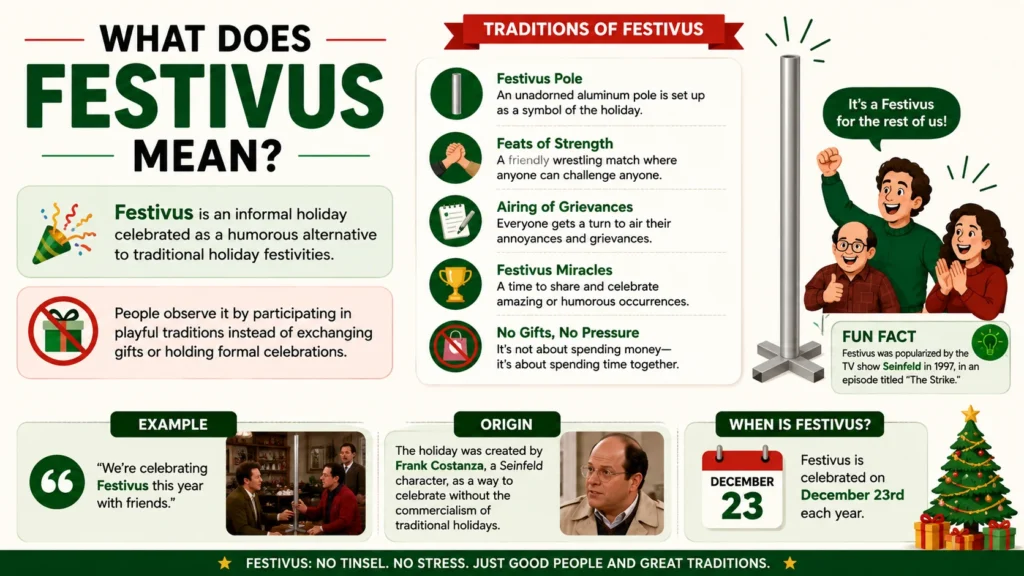
Festivus is an informal holiday celebrated as a humorous alternative to traditional holiday festivities.
People observe it by participating in playful traditions instead of exchanging gifts or holding formal celebrations.
Example:
“We’re celebrating Festivus this year with friends.”
The Origin of Festivus
Festivus was originally created by Daniel O’Keefe in the 1960s as a unique family tradition.
The holiday became famous decades later when his son, television writer Dan O’Keefe, introduced it in a 1997 episode of the sitcom Seinfeld.
The episode featured Frank Costanza declaring:
“A Festivus for the rest of us!”
This memorable line turned Festivus into a worldwide pop culture phenomenon.
Festivus Traditions
The Festivus Pole
Instead of decorating a Christmas tree, participants display a simple aluminum pole.
The plain design reflects the holiday’s humorous rejection of elaborate decorations.
Airing of Grievances
Family members and friends take turns sharing humorous complaints about one another.
Example:
“I’ve got a lot of problems with you people!”
Feats of Strength
The celebration traditionally ends with a playful physical challenge.
According to the tradition, Festivus is not officially over until the head of the household is defeated.
Festivus Dinner
Many families enjoy a casual meal together while celebrating.
Unlike traditional holiday feasts, there are no strict food rules.
Festivus Meaning in Different Contexts
Pop Culture
Festivus is often referenced in television shows, movies, podcasts, and memes.
Workplace
Some offices celebrate Festivus with humorous award ceremonies and friendly jokes.
Social Media
Every December, users post Happy Festivus messages and share jokes about the holiday.
Family Gatherings
Friends and relatives sometimes hold lighthearted Festivus dinners instead of traditional holiday parties.
Examples of Festivus in Sentences
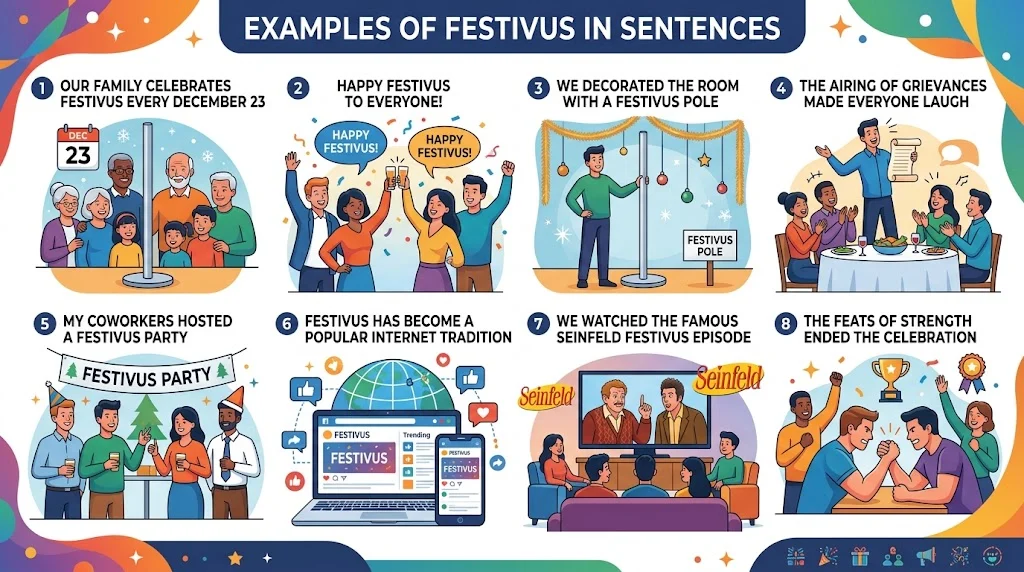
- Our family celebrates Festivus every December 23.
- Happy Festivus to everyone!
- We decorated the room with a Festivus pole.
- The Airing of Grievances made everyone laugh.
- My coworkers hosted a Festivus party.
- Festivus has become a popular internet tradition.
- We watched the famous Seinfeld Festivus episode.
- The Feats of Strength ended the celebration.
Common Festivus Phrases
Some famous expressions associated with the holiday include:
- Happy Festivus
- A Festivus for the rest of us
- Airing of Grievances
- Feats of Strength
- Festivus Pole
- Festivus Dinner
Festivus vs Christmas
Although both are celebrated in December, they are very different.
| Festivus | Christmas |
|---|---|
| Humorous and secular holiday. | Religious and cultural holiday. |
| Celebrated on December 23. | Celebrated on December 25. |
| Features a Festivus pole instead of a Christmas tree. | Often includes decorated Christmas trees. |
| Focuses on comedy and playful traditions. | Focuses on religious, cultural, and family traditions. |
Why Is Festivus So Popular?
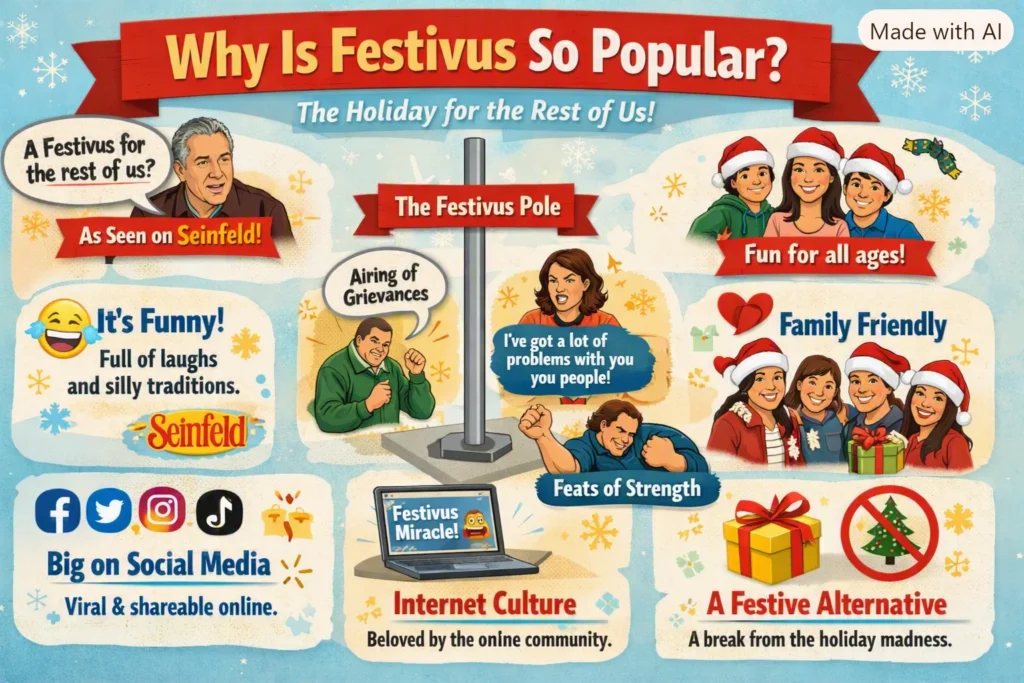
Festivus became famous because of its memorable appearance on Seinfeld and its unique traditions.
Today, people celebrate it because it is:
- Funny
- Easy to organize
- Family-friendly
- Popular on social media
- A part of internet culture
- A lighthearted alternative holiday
Festivus Meaning in English
Festivus is a humorous, unofficial holiday celebrated on December 23 as an alternative to traditional holiday celebrations. The term became widely known through the TV show Seinfeld, where Festivus is portrayed as a simple and unconventional celebration. It is associated with traditions such as the Airing of Grievances, Feats of Strength, and the Festivus pole. The phrase “A Festivus for the rest of us” is commonly associated with the holiday.
FAQs
What does Festivus mean?
Festivus is a humorous secular holiday celebrated on December 23 with unique traditions such as the Festivus pole and Airing of Grievances.
Is Festivus a real holiday?
Yes. Although it began as a family tradition and became famous through Seinfeld, many people now celebrate it each year.
When is Festivus celebrated?
Festivus is celebrated annually on December 23.
What is the Festivus pole?
The Festivus pole is a plain aluminum pole used instead of a decorated Christmas tree.
Why is Festivus famous?
It became internationally famous after appearing in a classic 1997 episode of Seinfeld.
How do you pronounce Festivus?
It is commonly pronounced fes-TEE-vus.
What Does “Happy Festivus” Mean?
“Happy Festivus” is a playful greeting used on December 23 to celebrate Festivus, a humorous secular holiday popularized by the TV show Seinfeld. The phrase is similar to saying “Happy Holidays,” but with a quirky, humorous twist
Conclusion
The Festivus meaning refers to a fun, unconventional holiday celebrated on December 23 that emphasizes humor, simplicity, and playful traditions.
What began as a private family custom became a worldwide pop culture tradition thanks to Seinfeld. Whether you’re gathering around a Festivus pole, participating in the Airing of Grievances, or simply wishing someone a Happy Festivus, the holiday offers a lighthearted way to celebrate with friends and family.
See Also More:
- Eave Meaning: Definition, Parts of a Roof, Examples, and How to Use It Correctly
- WDYM Meaning: Definition, Texting, Social Media, and Examples for 2026
- Dipsy Meaning | Definition, Origin, Slang & Everyday Usage For 2026