

Quick Answer
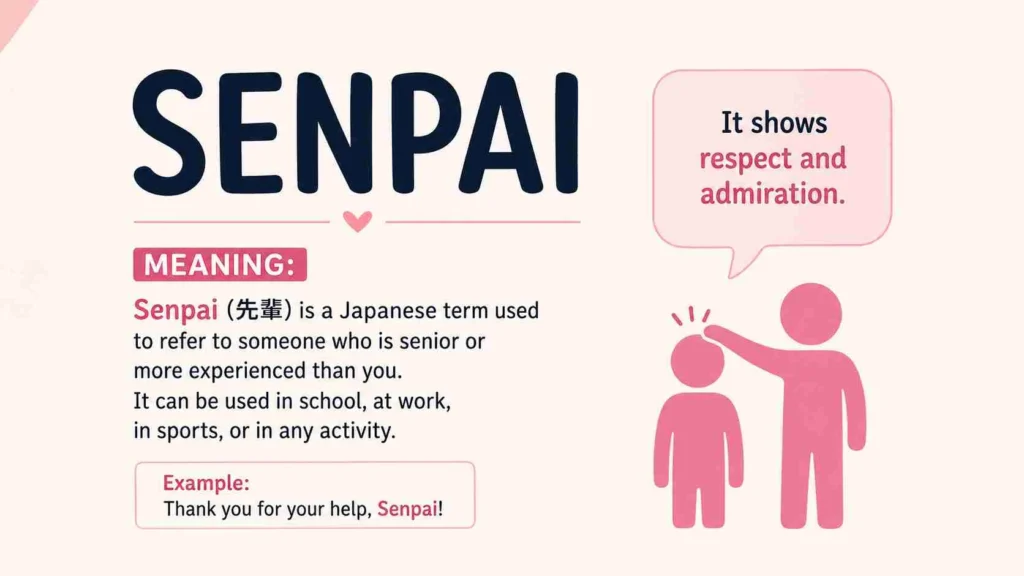
The senpai meaning is a senior, mentor, or someone with more experience who deserves respect. In Japanese culture, senpai refers to a person who joined a school, workplace, club, or organization before someone else. In anime and online culture, it is also used to describe someone a person admires or wants attention from.
The word senpai is one of the most recognized Japanese terms around the world, especially among anime, manga, and gaming fans. However, its meaning goes far beyond pop culture. In Japan, senpai is a respectful title used for someone who has more experience, seniority, or knowledge than you in school, sports, work, or other groups. It is not a name but an honorific that shows respect for someone who joined earlier or has achieved a higher level. Understanding the senpai meaning helps you use the word correctly and appreciate its cultural importance. This guide explains the complete meaning of senpai, its origin, pronunciation, examples, and how it is used in both Japanese culture and modern internet slang.
Senpai Meaning at a Glance
| Word | Senpai (先輩) |
|---|---|
| Pronunciation | SEN-pie |
| Part of Speech | Noun, Honorific Title |
| Primary Meaning | A senior or more experienced person deserving respect. |
| Modern Meaning | Someone admired, respected, or looked up to, especially in anime culture. |
| Language of Origin | Japanese |
| Common Contexts | Schools, workplaces, sports teams, clubs, anime, manga, gaming |
| Opposite Term | Kohai |
| Example Sentence | My senpai helped me learn the rules of the club. |
What Does Senpai Mean?
The word senpai refers to someone who has more experience or seniority within the same group.
Unlike a teacher or boss, a senpai is usually someone who is only slightly more senior and often helps guide newer members.
Example:
The new student asked her senpai for advice before joining the debate club.
The Origin of the Word Senpai
Senpai comes from the Japanese language and is written as 先輩.
Together, the word refers to someone who came before you and has more experience within the same organization or community.
The relationship between senpai and kohai is an important part of Japanese culture, encouraging respect, learning, and mutual support.
Senpai Meaning in Japanese Culture
In Japan, senpai is commonly used in everyday life.
At School
Older students guide younger students and help them adjust to school life.
Example:
Her senpai showed her around the campus on the first day.
At Work
Experienced employees often mentor new workers.
Example:
My senpai explained how the company works.
In Sports Clubs
Senior team members teach techniques, discipline, and teamwork to newer players.
Example:
The senpai encouraged the beginners during practice.
Senpai Meaning in Anime
Anime has introduced the word senpai to millions of viewers around the world.
Characters often call someone senpai as a sign of admiration or respect.
Sometimes the word also suggests a crush or romantic interest, depending on the story.
Example:
“Senpai, could you help me with my homework?”
This is why the term became popular among anime fans.
Senpai Meaning in Internet Slang
Online, senpai is often used humorously or affectionately.
People may call someone senpai if they:
- Admire them
- Want their attention
- Respect their skills
- Look up to them
- Consider them more experienced
One of the most famous internet phrases is:
“Notice me, Senpai.”
This expression jokingly means:
“I hope the person I admire finally notices me.”
Senpai vs Kohai
These two Japanese words are closely connected.
| Senpai | Kohai |
|---|---|
| Senior member | Junior member |
| More experienced | Less experienced |
| Offers guidance | Learns from the senior |
| Joined earlier | Joined later |
The relationship is based on respect and mentorship rather than authority.
Examples of Senpai in Sentences
- My senpai taught me how to use the equipment.
- Everyone respected the club’s senior members.
- She finally got to meet her favorite senpai.
- The senpai welcomed every new student warmly.
- He learned many valuable lessons from his senpai.
- My senpai encouraged me before the competition.
- Anime fans often use the word senpai jokingly online.
- The office senpai helped the new employee settle in.
Synonyms of Senpai
Depending on the context, similar words include:
- Senior
- Mentor
- Guide
- Experienced member
- Advisor
- Leader
- Role model
- Upperclassman
Antonyms of Senpai
The most common opposite term is:
- Kohai
- Junior
- Beginner
- Newcomer
- Apprentice
- Rookie
When Should You Use the Word Senpai?
You can use senpai when referring to someone who has more experience or seniority within the same school, workplace, club, or organization.
Outside Japan, many people also use the word playfully in anime communities, gaming groups, and online conversations.
If you’re speaking formally with Japanese speakers, it’s best to use the term respectfully and in the appropriate context.
FAQs
What does senpai mean?
Senpai means a senior, mentor, or someone with more experience who is respected within the same school, workplace, club, or organization.
Is senpai a romantic word?
Not usually. It simply means a respected senior. However, in anime, a character may call their crush “senpai,” which has made some people associate it with romance.
What is the opposite of senpai?
The opposite is kohai, which refers to a junior or less experienced member of a group.
Can girls be called senpai?
Yes. Both can be called senpai if they have greater seniority or experience.
Why do anime characters say senpai?
They use it as a respectful way to address someone older, more experienced, or someone they admire.
What does “Notice me, Senpai” mean?
It is an internet meme that jokingly means someone hopes the person they admire will finally pay attention to them.
Conclusion
The senpai meaning is rooted in respect, experience, and mentorship. In Japanese culture, it describes someone who has more seniority within a school, workplace, or organization and often helps guide those who are newer.
Thanks to anime and internet culture, the word has become popular around the world and is now widely recognized as a respectful or playful way to refer to someone admired. Whether you encounter senpai in everyday conversations, anime, or online communities, understanding its true meaning helps you use the term correctly and appreciate its cultural significance.
See Also More :
- 400+ Replies to “Why Are You Late?” That Are Funny & Excuse Ready In 2026
- 150+ One Word Text Replies From Guys That Say More With Less for 2026