
Quick Answer
The legacy meaning is something valuable that is passed down from one generation to another, such as property, traditions, knowledge, or values. It also refers to the lasting influence, reputation, or achievements that a person, family, or organization leaves behind.
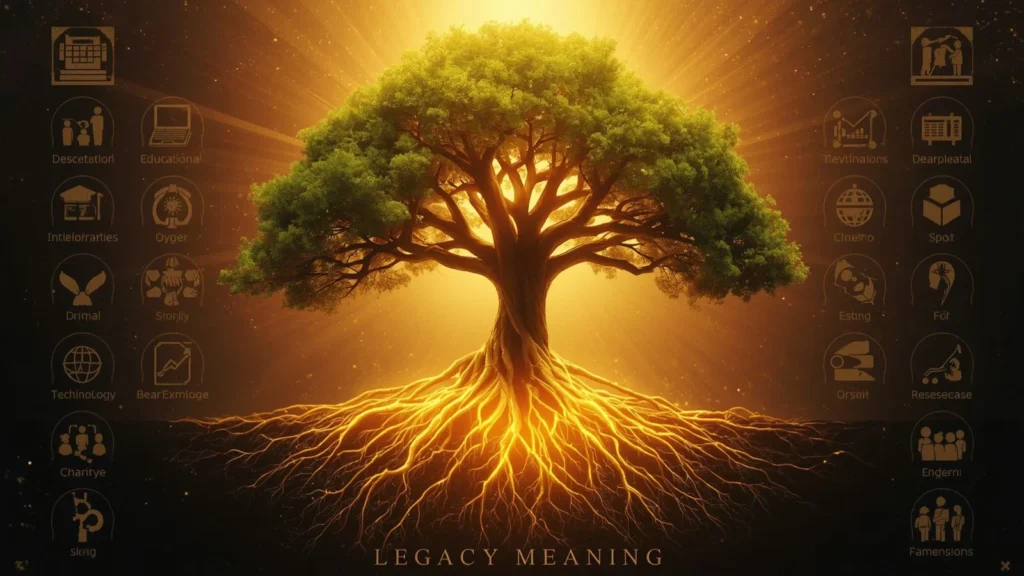
The word legacy is more than just an inheritance or something left behind after death. It represents the lasting impact a person, family, organization, or even a nation leaves for future generations. Whether it’s a family’s traditions, a leader’s achievements, or a company’s reputation, the legacy meaning is closely connected to influence, values, and memories that continue long after their creator is gone. Today, the word is also used in technology, education, sports, and business, making it one of the most versatile words in the English language. Understanding its different meanings helps you use it correctly in conversations, writing, and professional settings.
Legacy Meaning at a Glance
| Word | Legacy |
|---|---|
| Pronunciation | LEG-uh-see |
| Part of Speech | Noun |
| Primary Meaning | Something passed down from the past, such as property, traditions, or values. |
| Modern Meaning | The lasting impact, influence, or reputation someone leaves behind. |
| Common Contexts | Family, history, business, education, technology, sports, and law |
| Synonyms | Heritage, inheritance, bequest, tradition, impact, contribution |
| Antonyms | Loss, obscurity, disappearance, neglect |
| Example Sentence | Her kindness became a lasting legacy for future generations. |
What Does Legacy Mean?
The word legacy has several meanings depending on the context in which it is used.
Something Passed Down
One of the oldest meanings of legacy is something inherited from previous generations. This could be money, property, family traditions, valuable possessions, or cultural beliefs.
Example:
The historic home became part of the family’s legacy.
A Lasting Influence
Today, many people use legacy to describe the positive impact someone leaves through their actions, ideas, achievements, or character.
Example:
Her dedication to helping others created a legacy that continues to inspire people.
A Gift Left in a Will
In legal language, a legacy is money, property, or valuables left to someone through a will.
Example:
He received a generous legacy from his grandfather.
The Origin of the Word Legacy
The word legacy comes from the Latin word legatus, meaning “an ambassador” or “a person sent with authority.” It later evolved through Latin and Old French before becoming part of the English language.
Originally, the word referred mainly to property or gifts left to heirs after a person’s death. Over the centuries, its meaning expanded to include achievements, traditions, values, knowledge, and lasting influence. Today, legacy is used in many areas of life and often carries a positive meaning.
Legacy Meaning in Different Contexts
Family
In a family, legacy often refers to traditions, beliefs, stories, and values that are passed from one generation to the next.
Example:
Honesty and respect were part of their family legacy.
History
Historical figures are remembered because of the legacy they leave behind through their actions and contributions.
Example:
The leader’s legacy shaped the future of the nation.
Business
Companies work hard to build a legacy by creating trusted brands, innovative products, and strong customer relationships.
Example:
The founder built a legacy that continues decades after the company was established.
Technology
In technology, a legacy system refers to older software or hardware that remains in use even though newer versions are available.
Example:
Many organizations still depend on legacy systems for daily operations.
Education
Teachers and educational institutions leave a legacy through the knowledge and values they pass on to students.
Example:
Her teaching legacy continues through the thousands of students she inspired.
Sports
Athletes build a legacy by breaking records, winning championships, and motivating future generations.
Example:
His legacy in football will never be forgotten.
Types of Legacy
The word legacy can describe many different kinds of lasting contributions.
Personal Legacy
The memories, values, and influence someone leaves behind.
Family Legacy
Traditions, stories, customs, and possessions shared across generations.
Financial Legacy
Money, property, investments, or assets inherited by family members.
Cultural Legacy
Art, language, customs, music, and traditions preserved for future generations.
Professional Legacy
Achievements and contributions made during a person’s career.
Digital Legacy
Online accounts, photos, videos, documents, and digital assets that remain after someone’s lifetime.
Common Phrases with Legacy
Leave a Legacy
To create something meaningful that continues after you are gone.
Example:
She hopes to leave a legacy of kindness and generosity.
Lasting Legacy
An influence or achievement remembered for many years.
Example:
The scientist’s discoveries became his lasting legacy.
Family Legacy
The traditions, beliefs, and values passed down within a family.
Example:
Cooking together became an important family legacy.
Legacy System
Older technology that is still being used.
Example:
The company is planning to replace its legacy system.
Legacy Project
A project created to benefit future generations.
Example:
The new park is expected to become the mayor’s legacy project.
Examples of Legacy in Sentences
- Her compassion became her greatest legacy.
- The museum protects the country’s cultural legacy.
- His inventions created a lasting legacy in science.
- Their family legacy has been preserved for centuries.
- She hopes her work will leave a positive legacy.
- The athlete’s achievements inspired a new generation.
- The university continues the founder’s legacy.
- His generosity will remain part of his enduring legacy.
- The organization is proud of its community legacy.
- Every great leader is remembered by the legacy they leave behind.
Synonyms of Legacy
Depending on the context, similar words include:
- Heritage
- Inheritance
- Bequest
- Tradition
- Estate
- Birthright
- Contribution
- Influence
- Reputation
- Impact
- Endowment
- Gift
Antonyms of Legacy
Words with opposite meanings include:
- Loss
- Forgetfulness
- Disappearance
- Obscurity
- Neglect
- Erasure
- Insignificance
Why Is Legacy Important?
A legacy reflects what people remember about someone long after they are gone. While wealth and property can form part of a legacy, qualities like kindness, honesty, leadership, creativity, and service often leave a much deeper impression.
People build a legacy by:
- Helping others
- Supporting their communities
- Sharing knowledge
- Raising future generations
- Creating meaningful work
- Protecting traditions
- Inspiring positive change
A positive legacy can continue influencing people for many years.
FAQs
What does legacy mean?
Legacy means something valuable that is passed down from one generation to another. It can refer to property, traditions, values, achievements, or the lasting influence someone leaves behind.
Is legacy only about inheritance?
No. Although legacy can refer to money or property left through a will, it is also used to describe someone’s reputation, values, accomplishments, and long-term impact.
What is a personal legacy?
A personal legacy is how people remember your life, character, actions, and contributions after you are gone.
What does legacy mean in technology?
A legacy system is older software or hardware that is still being used because replacing it may be expensive or complicated.
What is a family legacy?
A family legacy includes traditions, beliefs, stories, values, and possessions that are passed from one generation to another.
Why is legacy important?
Legacy is important because it represents the lasting influence people have on their families, communities, workplaces, and future generations.
Conclusion
The legacy meaning goes far beyond material inheritance. It represents the values, achievements, traditions, and influence that continue long after a person’s lifetime.
you are talking about a family’s history, a successful career, a charitable contribution, or an important historical figure, the word legacy highlights the lasting impact that shapes future generations. Understanding its different meanings allows you to use the word confidently in everyday conversations, academic writing, and professional settings.