

Quick Answer
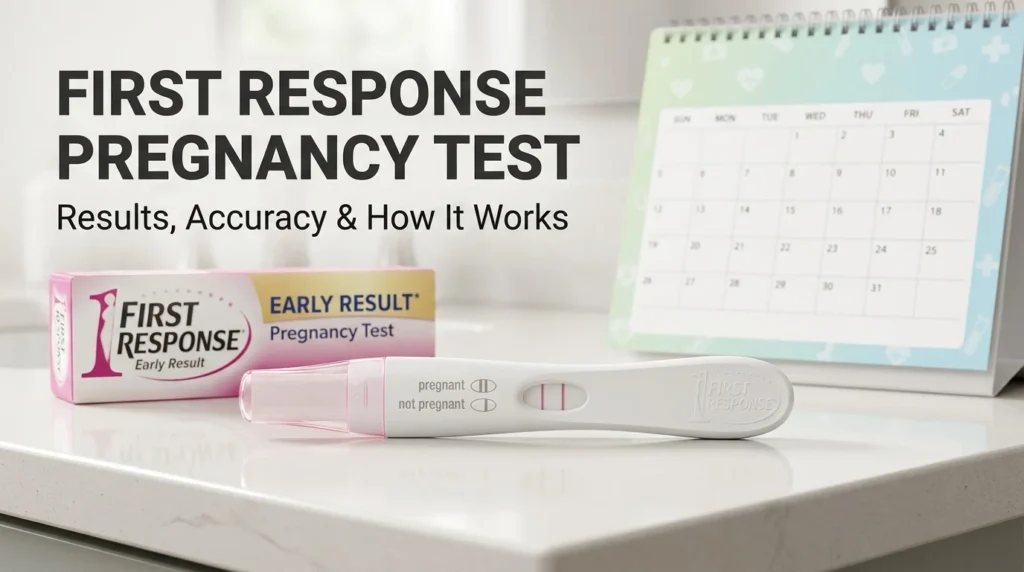
A First Response pregnancy test checks your urine for hCG, the hormone produced during pregnancy. Two pink lines on the Early Result test generally mean pregnant, while one pink line means not pregnant. A negative result can happen if you test too early.
Top things to know: positive result, negative result, faint line, invalid test, when to retest
Waiting for a pregnancy test result can make three minutes feel like thirty. You take the test, put it down, stare at it, check the clock, and then somehow check it again five seconds later.
A First Response pregnancy test is designed to detect hCG in urine. The Early Result test can detect pregnancy hormone as early as 6 days before the day of a missed period, although early testing can be less reliable than testing closer to your expected period.
Whether you’re taking the test for the first time, looking at a faint line, or wondering why you got a negative result, knowing how to read it can save you from unnecessary confusion. This guide explains the common First Response pregnancy test results in simple terms.
What Is a First Response Pregnancy Test?
A First Response pregnancy test is an at-home test that looks for human chorionic gonadotropin, or hCG, in urine. Your body produces hCG during pregnancy, and the amount generally increases as pregnancy progresses.
Different First Response tests have different result formats. The Early Result test uses pink lines, while the Digital test displays a result such as “YES+” or “NO-.”
Example: You take a First Response Early Result test and wait for the result window to develop.
Meaning: The test is checking your urine for detectable hCG.
How Does a First Response Pregnancy Test Work?
The test contains materials that react when hCG is present in your urine.
For the First Response Early Result test, one pink line is the control line and shows that the test worked. If hCG is detected, a second pink line appears in the test window.
Example: You see one pink line after taking the test.
Meaning: The control line shows that the test has worked, but no pregnancy hormone was detected at the test’s detection level.
When Can You Take a First Response Pregnancy Test?
The First Response Early Result pregnancy test is designed to detect hCG as early as 6 days before the day of your missed period, which is 5 days before the expected period.
However, testing earlier doesn’t guarantee a positive result if you’re pregnant. In First Response laboratory testing, the Early Result test detected pregnancy in 76% of pregnant samples 5 days before the expected period, compared with more than 99% from 3 days before the expected period onward.
Example: You test several days before your expected period and receive a negative result.
Meaning: It may simply be too early for enough hCG to be detected.
What Does a Positive First Response Pregnancy Test Mean?
For the First Response Early Result test, two pink lines mean pregnant, even when one line is lighter than the other.
A positive result means the test detected hCG, which normally indicates pregnancy. First Response recommends seeing a healthcare professional to confirm the pregnancy.
Example: Two pink lines appear in the result window within the correct reading time.
Meaning: The test has detected pregnancy hormone and the result is generally considered positive.
What Does a Negative First Response Pregnancy Test Mean?
For the Early Result test, one pink line means not pregnant according to the test’s result instructions.
However, a negative result doesn’t always mean you’re definitely not pregnant. If you tested early, your urine may not contain enough hCG for the test to detect. First Response recommends retesting if your period doesn’t arrive within 7 days.
Example: You get one pink line but your period still hasn’t started.
Meaning: Pregnancy may not be detected yet, so retesting can provide more information.
What Does a Faint Line Mean on a First Response Pregnancy Test?
A faint line can definitely cause confusion.
According to First Response, if a second line appears pink, even if it’s faint, the test has detected pregnancy hormone. A colorless or shadowy mark isn’t considered a positive result.
Example: You see a very light pink second line during the proper reading time.
Meaning: A faint pink second line can indicate a positive result.
What Does an Invalid First Response Pregnancy Test Mean?
An invalid test doesn’t give you a usable result.
For the First Response Early Result test, there should be at least one pink line in the result window to show that the test has been completed correctly. If the control line doesn’t appear, First Response recommends using another test and carefully following the directions.
Example: You finish the test but no control line appears.
Meaning: The test may not have worked correctly and shouldn’t be interpreted as positive or negative.
How Long Should You Wait for a First Response Result?
The exact waiting time depends on the First Response test you’re using.
The Early Result test says results should appear within 3 minutes, and a negative result shouldn’t be read after 10 minutes.
Other First Response products can have different timing instructions. For example, the Rapid Result test uses a 1-minute reading time.
Example: You are using the Early Result test and check it after three minutes.
Meaning: You’re following the recommended reading time for that test.
Is First Morning Urine Better for a First Response Pregnancy Test?
First morning urine can contain a higher concentration of pregnancy hormone.
First Response says its Rapid Result test can be used at any time of day, although first morning urine generally contains the highest level of pregnancy hormone.
This can be particularly useful when you’re testing early and hCG levels may still be low.
Example: You want to test early and choose your first urine of the morning.
Meaning: A more concentrated sample may make it easier to detect low levels of hCG.
How Accurate Is a First Response Pregnancy Test?
First Response states that its Early Result test is over 99% accurate from the day of your expected period when detecting typical pregnancy hormone levels.
Early testing can produce different results because hCG levels vary between people and pregnancies. The FDA also notes that testing too early can lead to a negative result even when someone is pregnant.
Example: You test before your expected period and get a negative result.
Meaning: The result may be less reliable because the test was taken early.
First Response Pregnancy Test Results at a Glance
| Result | What It Means |
|---|---|
| Two pink lines | Pregnant |
| One pink line | Not pregnant |
| Faint pink second line | Can indicate pregnancy |
| No control line | Invalid test |
| Digital YES+ | Pregnant |
| Digital NO- | Not pregnant |
The exact result format can vary by First Response product, so always use the instructions that came with your specific test.
What Should You Do After a Positive Result?
A positive First Response result normally indicates that hCG has been detected.
First Response recommends seeing a doctor to confirm the pregnancy. If you receive a positive result but don’t believe you’re pregnant, speak with a healthcare professional.
Example: Your test shows two pink lines.
Meaning: The result indicates pregnancy and should be followed up with appropriate healthcare.
What Should You Do After a Negative Result?
If the test is negative but your period doesn’t arrive, you may need to test again.
First Response says that if you don’t get your period within 7 days after a negative Early Result test, you should retest. If another test is negative and your period still hasn’t started, contact your doctor.
Example: You receive a negative test but remain several days late.
Meaning: Testing again can help determine whether the first test was simply too early.
Can an Early First Response Test Be Negative When You’re Pregnant?
Yes. Testing early can sometimes produce a negative result even when pregnancy has occurred.
The FDA explains that if you test too early, your body may not have produced enough hCG for the test to detect.
First Response also reports that some pregnant people don’t have detectable pregnancy hormone in their urine when testing early.
Example: You test five days before your expected period and receive a negative result.
Meaning: The result may be negative because your hCG level is still too low.
FAQs
What do two lines mean on a First Response pregnancy test?
On the Early Result test, two pink lines mean pregnant. One line may be lighter than the other and still indicate a positive result.
What does one line mean on a First Response pregnancy test?
One pink control line means the test did not detect pregnancy hormone at the test’s detection level.
What does a faint pink line mean?
A faint pink second line can indicate pregnancy. First Response says even a faint pink test line indicates that hCG was detected.
What if the faint line is gray or colorless?
A colorless or shadowy mark isn’t considered a positive result according to First Response. If you’re unsure, repeat the test or speak with a healthcare professional.
How early can First Response detect pregnancy?
The Early Result test is designed to detect hCG as early as 6 days before the day of your missed period.
Can I take a First Response test at night?
Some First Response tests can be used at any time of day. However, first morning urine generally has a higher concentration of pregnancy hormone.
What if my First Response test is negative but my period is late?
If your period doesn’t arrive within 7 days, First Response recommends retesting. If the second test is negative and your period still hasn’t started, contact your doctor.
How long should I wait before reading my First Response test?
The answer depends on the product. The Early Result test says to read the result after 3 minutes, while the Rapid Result test uses a 1-minute reading time. Always follow the instructions for your exact test.
Can medications affect a First Response pregnancy test?
First Response says medications containing hCG can affect test results. It also says the test should not be affected by alcohol, antibiotics, or contraceptive pills.
Do First Response pregnancy tests expire?
Yes. First Response says its pregnancy tests have expiration dates, which can vary by product. Check the expiration date on the individual package or box before using the test.
Conclusion
A First Response pregnancy test can give you an answer quickly, but the timing and correct reading of the test matter. Two pink lines generally mean pregnant on the Early Result test, while one pink line means not pregnant. A faint pink second line can also indicate pregnancy, while a missing control line means the test is invalid.
If you test early and receive a negative result, don’t panic. hCG may simply be too low to detect. Follow the instructions for your specific test and retest when recommended. If you’re unsure about a result or continue getting unexpected results, speak with a healthcare professional.
See Also More :
- Can Someone Else Read Your Instagram Story Reply In 2026
- 200+ Reply to “Have a Good Day Reply” That Sound Polite, Friendly & Memorable In 2026