
Quick Answer
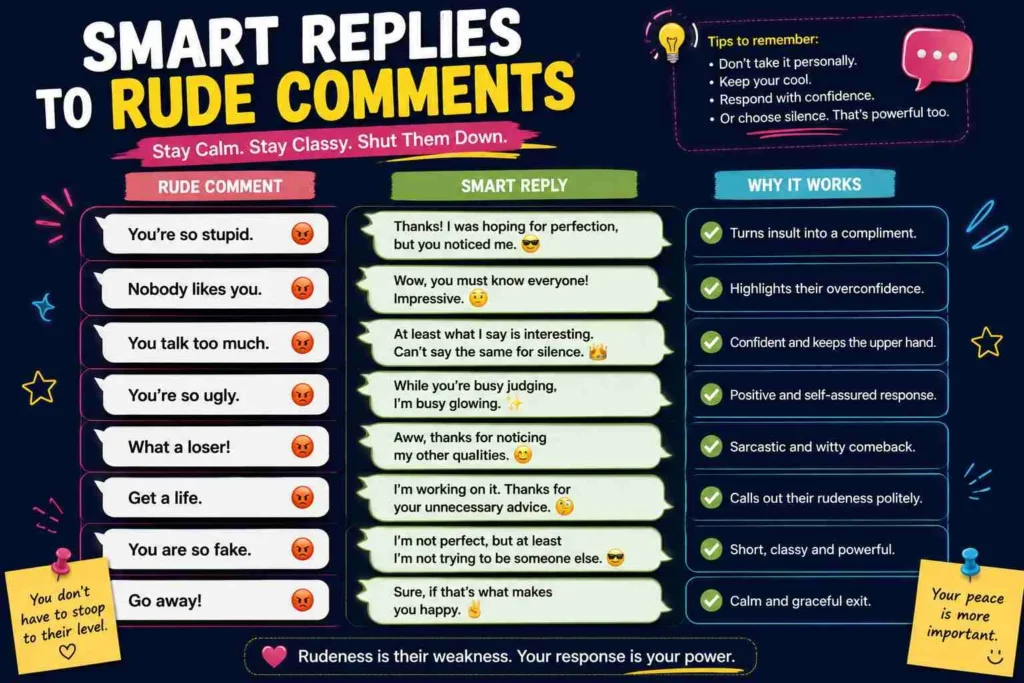
Rude comments can catch you off guard, but the smartest responses stay calm, confident, and composed. Instead of arguing, a clever reply can defuse tension, expose the rudeness, or simply show that you are unbothered.
Top replies include “Thanks for sharing your opinion.”, “Interesting perspective.”, “I will give that the consideration it deserves.”, “Noted.”, “I hope your day gets better.”
Almost everyone has dealt with rude comments at some point. Maybe it was a snarky coworker, a sarcastic friend, a random internet troll, a classmate trying to be funny, or someone in the comments section who woke up and chose negativity. While it is tempting to fire back with an equally rude response, that approach rarely ends well.
The smartest people know that confidence is often quieter than anger. A well crafted reply can stop a rude person in their tracks without creating unnecessary drama. In fact, the best smart replies to rude comments often leave a stronger impression because they show self control, wit, and confidence.
Whether you want to stay professional, sound clever, be subtly sarcastic, or simply end the conversation gracefully, this collection has you covered. These responses are text ready, social media friendly, and useful for everyday situations where you want to handle negativity like a pro.
Smart Replies That Stay Calm and Collected
“Thank you for your input.”
Example: When someone makes an unnecessary criticism.
Meaning: You acknowledge their comment without giving it power.
“I appreciate your perspective.”
Example: During a disagreement.
Meaning: You remain respectful.
“That is one way to look at it.”
Example: When someone is being judgmental.
Meaning: You avoid arguing.
“Interesting opinion.”
Example: Responding to criticism.
Meaning: You stay neutral.
“I hear what you are saying.”
Example: Heated discussions.
Meaning: You show maturity.
“Noted.”
Example: When someone makes a rude remark.
Meaning: You refuse to engage.
“Thanks for sharing.”
Example: Online comments.
Meaning: You remain composed.
“I will keep that in mind.”
Example: Unwanted advice.
Meaning: You politely move on.
“That is certainly a thought.”
Example: Strange criticism.
Meaning: You subtly disagree.
“I understand your viewpoint.”
Example: Tense conversation.
Meaning: You stay calm.
“Everyone sees things differently.”
Example: Judgmental comments.
Meaning: You respect differences.
“I appreciate your honesty.”
Example: Direct criticism.
Meaning: You stay gracious.
“Fair enough.”
Example: Minor disagreements.
Meaning: You end the discussion.
“Thanks for letting me know.”
Example: Harsh feedback.
Meaning: You avoid conflict.
“That is your opinion, and that is okay.”
Example: Personal criticism.
Meaning: You stay confident.
Clever Replies to Put Rude People in Their Place
“Did that sound better in your head?”
Example: When someone says something unnecessarily rude.
Meaning: You call out the comment.
“That was a bold thing to say out loud.”
Example: Public rude remarks.
Meaning: You highlight their behavior.
“Confidence is great, accuracy is better.”
Example: Incorrect criticism.
Meaning: You challenge them intelligently.
“I am impressed by your dedication to being wrong.”
Example: Persistent negativity.
Meaning: You respond with wit.
“That is certainly an interesting choice of words.”
Example: Insulting comments.
Meaning: You subtly criticize.
“I expected better.”
Example: Disrespectful behavior.
Meaning: You show disappointment.
“You really thought that was necessary?”
Example: Unkind remarks.
Meaning: You make them reflect.
“That tells me more about you than me.”
Example: Personal attacks.
Meaning: You redirect attention.
“What a fascinating attempt.”
Example: Failed insult.
Meaning: You stay above it.
“You seem very passionate about this.”
Example: Overly aggressive criticism.
Meaning: You remain calm.
“That was unexpectedly rude.”
Example: Harsh comments.
Meaning: You call it out directly.
“I hope that made you feel better.”
Example: Mean remarks.
Meaning: You suggest the issue is theirs.
“You sound upset.”
Example: Angry comments.
Meaning: You expose emotion.
“I admire your confidence.”
Example: Wrong but loud opinions.
Meaning: Subtle sarcasm.
“That is quite an assumption.”
Example: Judgmental statements.
Meaning: You challenge their conclusion.
Funny Replies to Rude Comments
“Do you offer classes in this?”
Example: Someone being rude.
Meaning: You joke about their behavior.
“That was almost helpful.”
Example: Unconstructive criticism.
Meaning: Light sarcasm.
“You should put that on a motivational poster.”
Example: Ridiculous comment.
Meaning: You mock the statement.
“I am framing that one.”
Example: Silly insult.
Meaning: You do not take it seriously.
“Wow, free negativity.”
Example: Random criticism.
Meaning: You make light of it.
“I did not order that opinion.”
Example: Unwanted comments.
Meaning: You joke about it.
“You seem fun at parties.”
Example: Negative attitude.
Meaning: Classic comeback.
“Was that your final draft?”
Example: Weak insult.
Meaning: You poke fun at their effort.
“Thank you for that unforgettable contribution.”
Example: Useless comment.
Meaning: Humor and sarcasm.
“That deserves a participation trophy.”
Example: Poor insult attempt.
Meaning: You tease them.
“You practiced that, did you not?”
Example: Rehearsed sounding insult.
Meaning: Light mockery.
“I will recover somehow.”
Example: Minor insult.
Meaning: You show confidence.
“That almost hurt my feelings.”
Example: Weak criticism.
Meaning: You dismiss it.
“You really committed to that comment.”
Example: Rude statement.
Meaning: You acknowledge their effort.
“What an exciting use of your time.”
Example: Online trolls.
Meaning: You point out the absurdity.
Sarcastic Replies to Rude Comments
“Thank you for your kindness.”
Example: Obvious rudeness.
Meaning: Heavy sarcasm.
“Your manners are inspiring.”
Example: Disrespectful behavior.
Meaning: You highlight the issue.
“What would I do without your wisdom?”
Example: Condescending comments.
Meaning: Sarcastic appreciation.
“You have truly changed my life.”
Example: Unwanted criticism.
Meaning: Exaggerated sarcasm.
“I am taking detailed notes.”
Example: Mean feedback.
Meaning: You do not care.
“Your opinion means everything.”
Example: Internet trolls.
Meaning: Sarcasm.
“Please continue, this is fascinating.”
Example: Endless negativity.
Meaning: You mock their behavior.
“That was incredibly helpful.”
Example: Useless comment.
Meaning: Obvious sarcasm.
“I will alert the media.”
Example: Dramatic criticism.
Meaning: You make fun of it.
“You deserve an award for that insight.”
Example: Silly remarks.
Meaning: Sarcastic praise.
“What a groundbreaking observation.”
Example: Obvious criticism.
Meaning: You mock the comment.
“I can hardly contain my excitement.”
Example: Rude remarks.
Meaning: You dismiss them.
“That was deeply moving.”
Example: Unnecessary negativity.
Meaning: Pure sarcasm.
“Your timing is remarkable.”
Example: Badly timed criticism.
Meaning: You mock politely.
“You must be very proud of that comment.”
Example: Mean remarks.
Meaning: Subtle criticism.
Classy Replies That Show Confidence
“I am comfortable with who I am.”
Example: Personal attacks.
Meaning: Self confidence.
“We do not have to agree.”
Example: Disagreements.
Meaning: Respectful confidence.
“I wish you well.”
Example: Ending negativity.
Meaning: Grace.
“I am not offended.”
Example: Insults.
Meaning: Strength.
“That does not change my opinion.”
Example: Criticism.
Meaning: Confidence.
“I am happy with my choices.”
Example: Judgmental comments.
Meaning: Self assurance.
“You are entitled to your view.”
Example: Arguments.
Meaning: Maturity.
“I know my worth.”
Example: Personal attacks.
Meaning: Confidence.
“I am focusing on what matters.”
Example: Negativity.
Meaning: Priorities.
“I choose not to take that personally.”
Example: Harsh comments.
Meaning: Emotional control.
“I am good, thanks.”
Example: Passive aggressive remarks.
Meaning: Calm confidence.
“I will keep moving forward.”
Example: Criticism.
Meaning: Resilience.
“That says more about you than me.”
Example: Mean comments.
Meaning: Perspective.
“I have nothing to prove.”
Example: Competitive remarks.
Meaning: Security.
“I am at peace with that.”
Example: Judgment.
Meaning: Confidence.
Professional Replies to Rude Comments at Work
“Thank you for the feedback.”
Example: Workplace criticism.
Meaning: Professionalism.
“I appreciate your perspective.”
Example: Office disagreement.
Meaning: Respect.
“Let us focus on the issue.”
Example: Heated meeting.
Meaning: Staying productive.
“I would prefer to keep this constructive.”
Example: Negative discussion.
Meaning: Setting boundaries.
“Can we keep the conversation professional?”
Example: Disrespectful remarks.
Meaning: Direct professionalism.
“I am happy to discuss solutions.”
Example: Workplace conflict.
Meaning: Problem solving.
“Let us move forward productively.”
Example: Ongoing disagreement.
Meaning: Focus.
“I believe we can discuss this respectfully.”
Example: Tension at work.
Meaning: Professional standards.
“I would appreciate a constructive approach.”
Example: Harsh criticism.
Meaning: Boundary setting.
“Let us stick to the facts.”
Example: Emotional arguments.
Meaning: Objectivity.
“I understand your concern.”
Example: Workplace issue.
Meaning: Acknowledgment.
“I am open to useful feedback.”
Example: Criticism.
Meaning: Professional growth.
“Let us keep things productive.”
Example: Team discussions.
Meaning: Focus on results.
“I value respectful communication.”
Example: Office conflict.
Meaning: Standards.
“I think we can handle this better.”
Example: Tense situations.
Meaning: Leadership.
Smart Replies for Online Trolls
“Thanks for boosting engagement.”
Example: Social media comments.
Meaning: Their comment helps your post.
“You cared enough to comment.”
Example: Negative online remarks.
Meaning: They are invested.
“Welcome to the comment section.”
Example: Troll behavior.
Meaning: Casual dismissal.
“I hope you find what you are looking for.”
Example: Angry comments.
Meaning: Graceful response.
“That is a lot of emotion for a comment.”
Example: Heated replies.
Meaning: You stay calm.
“I appreciate the free interaction.”
Example: Social media negativity.
Meaning: Engagement joke.
“Not everyone has to agree.”
Example: Online debates.
Meaning: Maturity.
“Thank you for stopping by.”
Example: Trolls.
Meaning: Polite dismissal.
“I wish you a better day.”
Example: Negative comments.
Meaning: Kind response.
“You seem invested in this.”
Example: Persistent troll.
Meaning: Pointing out obsession.
“That is one interpretation.”
Example: Misunderstood content.
Meaning: Neutral response.
“We can agree to disagree.”
Example: Online arguments.
Meaning: Ending discussion.
“I appreciate your enthusiasm.”
Example: Angry criticism.
Meaning: Light sarcasm.
“Thanks for sharing your thoughts.”
Example: Random negativity.
Meaning: Calm response.
“I think we will survive this disagreement.”
Example: Online debates.
Meaning: Perspective.
Short Smart Replies to Rude Comments
“Noted.”
Example: Quick response.
Meaning: You move on.
“Interesting.”
Example: Criticism.
Meaning: Neutrality.
“Okay.”
Example: Rude remarks.
Meaning: No reaction.
“Fair enough.”
Example: Minor disagreement.
Meaning: End discussion.
“Good to know.”
Example: Negative opinion.
Meaning: Calm response.
“Thanks.”
Example: Criticism.
Meaning: Unexpected politeness.
“Understood.”
Example: Harsh comments.
Meaning: Professional.
“Sure.”
Example: Passive aggression.
Meaning: Unbothered.
“If you say so.”
Example: Arguments.
Meaning: Disengagement.
“Alright.”
Example: Negativity.
Meaning: Calmness.
“Duly noted.”
Example: Criticism.
Meaning: Formal dismissal.
“That is your view.”
Example: Opinions.
Meaning: Respectful distance.
“I hear you.”
Example: Disagreement.
Meaning: Acknowledgment.
“Got it.”
Example: Negative comments.
Meaning: End conversation.
“Moving on.”
Example: Unnecessary drama.
Meaning: Closure.
Amazing Yet Smart Replies
“Being rude does not make you right.”
Example: Personal attacks.
Meaning: Calling out behavior.
“You seem unusually invested in me.”
Example: Repeated criticism.
Meaning: Turning attention back.
“That confidence is impressive considering the facts.”
Example: Incorrect criticism.
Meaning: Smart challenge.
“You mistake volume for intelligence.”
Example: Loud arguments.
Meaning: Clever observation.
“I hope that felt productive.”
Example: Mean comments.
Meaning: Subtle criticism.
“You are arguing with a version of me that exists only in your head.”
Example: False assumptions.
Meaning: Exposing misconceptions.
“That was more revealing than you intended.”
Example: Personal attacks.
Meaning: Insightful comeback.
“Your opinion has been received and filed.”
Example: Rudeness.
Meaning: Dismissive confidence.
“I will give that the consideration it deserves.”
Example: Weak criticism.
Meaning: Polite shutdown.
“You seem committed to misunderstanding.”
Example: Ongoing argument.
Meaning: Clever observation.
“I expected facts, not frustration.”
Example: Emotional criticism.
Meaning: Focus on logic.
“That is an interesting way to avoid the actual issue.”
Example: Deflection.
Meaning: Calling it out.
“You sound more upset than I am.”
Example: Heated exchanges.
Meaning: Emotional awareness.
“The confidence is impressive, the accuracy less so.”
Example: Wrong criticism.
Meaning: Smart sarcasm.
“I think we have reached the limit of this conversation.”
Example: Endless negativity.
Meaning: Final boundary.
Best Smart Replies to Rude Comments for Any Situation
“Thanks for sharing your opinion.”
Example: General use.
Meaning: Calm confidence.
“Interesting perspective.”
Example: Disagreements.
Meaning: Neutrality.
“I will think about that.”
Example: Criticism.
Meaning: Polite response.
“I hope your day improves.”
Example: Mean remarks.
Meaning: Kind confidence.
“We can agree to disagree.”
Example: Arguments.
Meaning: Respectful ending.
“That is your opinion.”
Example: Judgmental comments.
Meaning: Boundaries.
“I am comfortable with my choices.”
Example: Personal criticism.
Meaning: Confidence.
“Noted.”
Example: Quick shutdown.
Meaning: Minimal engagement.
“I appreciate your honesty.”
Example: Direct comments.
Meaning: Maturity.
“Let us move on.”
Example: Ongoing conflict.
Meaning: Closure.
“I hear you.”
Example: Criticism.
Meaning: Acknowledgment.
“Thank you for your concern.”
Example: Passive aggressive comments.
Meaning: Classy response.
“I wish you well.”
Example: Negative interactions.
Meaning: Grace.
“That was unexpected.”
Example: Rude remarks.
Meaning: Calm observation.
“Have a great day.”
Example: Ending a conversation.
Meaning: Positive closure.
FAQs
What is the smartest way to respond to a rude comment?
The smartest response is calm, confident, and controlled rather than emotional or aggressive.
Should I reply to rude comments at all?
Not always. Sometimes ignoring a rude comment is the strongest response.
How do I shut down rude people politely?
Use respectful replies like “Thank you for your opinion” or “We can agree to disagree.”
Are sarcastic replies effective?
They can be, but they work best when used carefully and without escalating the situation.
What is the best short reply to a rude comment?
“Noted.” is one of the most effective short responses because it acknowledges the comment without inviting further argument.
Conclusion
Rude comments do not have to ruin your day or pull you into unnecessary arguments. The smartest replies are often the ones that stay calm, confident, and in control. Whether you choose a witty comeback, a classy response, a professional reply, or a subtle dose of sarcasm, the goal is to protect your peace while making your point.
Keep these smart replies to rude comments handy for social media, work, school, and everyday life. The next time someone brings negativity your way, respond with confidence, move forward, and let your composure speak louder than their rudeness.