
Quick Answer:
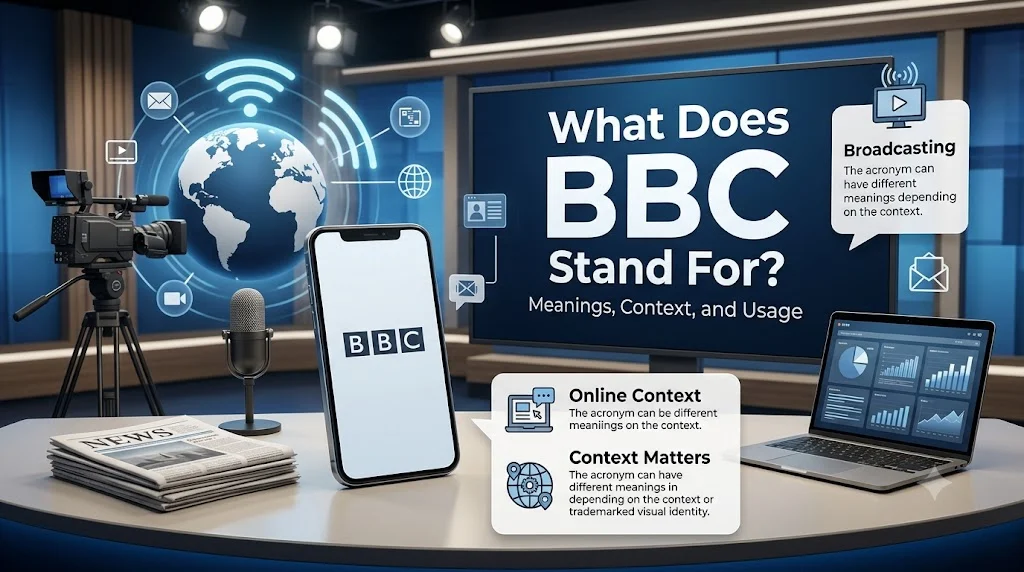
BBC most commonly stands for British Broadcasting Corporation, the UK’s public-service broadcaster. In texting and online slang, however, BBC can also have an adult sexual meaning, so context is important. In some other contexts, it can refer to unrelated organizations, businesses or technical terms.
Seeing “BBC” in a message, comment, search result, or social media post can be confusing because the abbreviation has several meanings. If you’re wondering what BBC stands for, the right answer depends on where you saw it. In news, television, radio, and general media, BBC usually means the British Broadcasting Corporation, one of the world’s best-known broadcasters.
In casual internet conversations, however, BBC can also be used as an adult slang term, which is why the same three letters may have a completely different meaning in a private chat or online post. You may also encounter BBC as an abbreviation for organizations, academic terms, or other names. In this guide, you’ll learn the main meanings of BBC, how context changes its meaning, examples of common usage, and how to understand or respond to it appropriately.
Definition & Meaning
The most widely recognized meaning of BBC is British Broadcasting Corporation.
The BBC is a major public-service broadcaster based in the United Kingdom. It produces and distributes television, radio, news, documentaries, entertainment, and online content.
For example:
“I watched the BBC news this morning.”
Here, BBC clearly refers to the British Broadcasting Corporation.
However, online slang has given BBC another meaning. In adult internet slang, BBC can refer to an explicit sexual phrase describing a penis by race and size. This meaning is sexual and can be offensive or objectifying, depending on how it is used.
Therefore, context is extremely important.
BBC at a Glance
| BBC | Meaning | Context |
|---|---|---|
| BBC | British Broadcasting Corporation | News and media |
| BBC | Adult sexual slang | NSFW internet content |
| BBC | Other organization or abbreviation | Context-specific |
Background & History
The British Broadcasting Corporation was established in 1922 and became one of the most influential broadcasting organizations in the world.
Its name became widely recognized through television, radio, journalism, documentaries, and later digital media.
As internet culture developed, the abbreviation BBC also gained unrelated meanings in online slang. Some of these meanings became common in adult online spaces.
This creates a major difference between formal and informal uses.
For example:
“BBC documentary”
almost certainly refers to the British broadcaster.
Meanwhile, an explicit adult conversation may use BBC differently.
The surrounding words are therefore essential when interpreting the abbreviation.
Usage in Various Contexts
News and Media
“The BBC reported the latest developments.”
Here, BBC means the British Broadcasting Corporation.
Television
“I watched a BBC documentary last night.”
Again, this refers to the broadcaster.
Education
Someone might say:
“The BBC has some useful educational resources.”
This is a media-related reference.
Online Slang
In adult online conversations, BBC may have its explicit slang meaning.
If the surrounding content is sexual or NSFW, the slang interpretation may be intended.
Common Misconceptions & Clarifications
One common misconception is that BBC always refers to the British broadcaster.
That is not true online.
Another misconception is that the slang meaning is appropriate in every conversation.
It isn’t.
The adult meaning is NSFW and should not be casually introduced into professional, family, educational, or public conversations.
The safest approach is to look at the surrounding context before interpreting BBC.
Similar Terms & Alternatives
When referring to the British broadcaster, people may use:
| Term | Meaning |
|---|---|
| BBC | British Broadcasting Corporation |
| BBC News | BBC’s news service |
| BBC World Service | BBC’s international service |
| British Broadcasting Corporation | Full formal name |
| The BBC | Common shortened reference |
For the slang meaning, there is no need to repeat the explicit phrase in ordinary conversation. Context is enough to understand that it is an adult reference.
How to Respond to BBC
Your response should depend on the context.
If Someone Means the Broadcaster
“Yes, I saw that BBC report too.”
If the Meaning Is Unclear
“Which BBC do you mean?”
If Someone Uses the Adult Meaning
If you’re uncomfortable, you can simply say:
“I’m not comfortable with that kind of conversation.”
Or:
“Let’s keep the conversation respectful.”
Regional or Cultural Differences
The media meaning of BBC is particularly familiar in the United Kingdom and other countries where BBC content is widely available.
The adult slang meaning is more associated with global internet culture and English-language NSFW communities.
This means someone in a news discussion will probably understand BBC as the broadcaster, while someone in an adult online conversation may interpret it differently.
Comparison With Similar Terms
| Term | Meaning | Context |
|---|---|---|
| BBC | British Broadcasting Corporation | Media |
| ITV | UK television network | Media |
| CNN | Cable News Network | News |
| NPR | National Public Radio | Media |
| NSFW | Not Safe For Work | Internet |
| BBC | Adult slang | NSFW context |
The same abbreviation can therefore belong to completely different parts of online language.
Usage in Online Communities & Dating Apps
BBC can appear in online communities, dating apps, social media, and private messages.
In a news discussion:
“Did you see the BBC article?”
clearly refers to the broadcaster.
In an adult dating or NSFW conversation, BBC may have the explicit slang meaning.
If someone sends only:
“BBC?”
without context, it is reasonable to ask what they mean rather than assuming.
Hidden or Offensive Meanings
The adult slang meaning of BBC can be sexual and potentially objectifying, particularly because it connects a sexual stereotype with race.
That meaning is not appropriate for professional or most public conversations.
It is important to distinguish between:
BBC = British Broadcasting Corporation
and
BBC = adult internet slang.
The letters themselves are not inherently offensive. The meaning comes from context.
Suitability for Professional Communication
When discussing the British Broadcasting Corporation, BBC is completely appropriate in professional communication.
For example:
“According to the BBC report, the event began earlier than expected.”
However, the adult slang meaning should obviously not be used in professional communication.
If you encounter BBC in a workplace message and the context is unclear, don’t assume the slang meaning. Consider the topic first.
FAQs
What does BBC stand for?
BBC most commonly stands for British Broadcasting Corporation, the UK’s public-service broadcaster.
What does BBC mean in texting?
In ordinary texting, BBC can refer to the British broadcaster. In NSFW conversations, it can also have an adult slang meaning.
What does BBC mean on social media?
It depends on the context. In news or entertainment posts, it usually means the British Broadcasting Corporation. In adult content, it may have a sexual slang meaning.
Is BBC a slang word?
BBC is primarily an abbreviation. It can also be used as adult internet slang in certain contexts.
Is the BBC British?
Yes. The British Broadcasting Corporation is a UK-based public-service broadcaster.
Can BBC have an offensive meaning?
The adult slang use can be sexual and objectifying, particularly because it involves a racial stereotype. The broadcaster’s meaning is not offensive.
Should I use BBC in professional communication?
Yes, when you mean the British Broadcasting Corporation. Avoid the adult slang interpretation in professional settings.
Conclusion
So, what does BBC stand for? In most news, television, radio, and media contexts, BBC stands for British Broadcasting Corporation. It is one of the UK’s most recognized broadcasting organizations.
However, BBC also has an adult slang meaning online, so context matters when you see the abbreviation in texts, comments, or private messages. If the conversation involves news or entertainment, the broadcaster is almost certainly being discussed. If the conversation is sexual or NSFW, the slang interpretation may be intended.
Understanding the surrounding conversation is the easiest way to determine which meaning applies.