
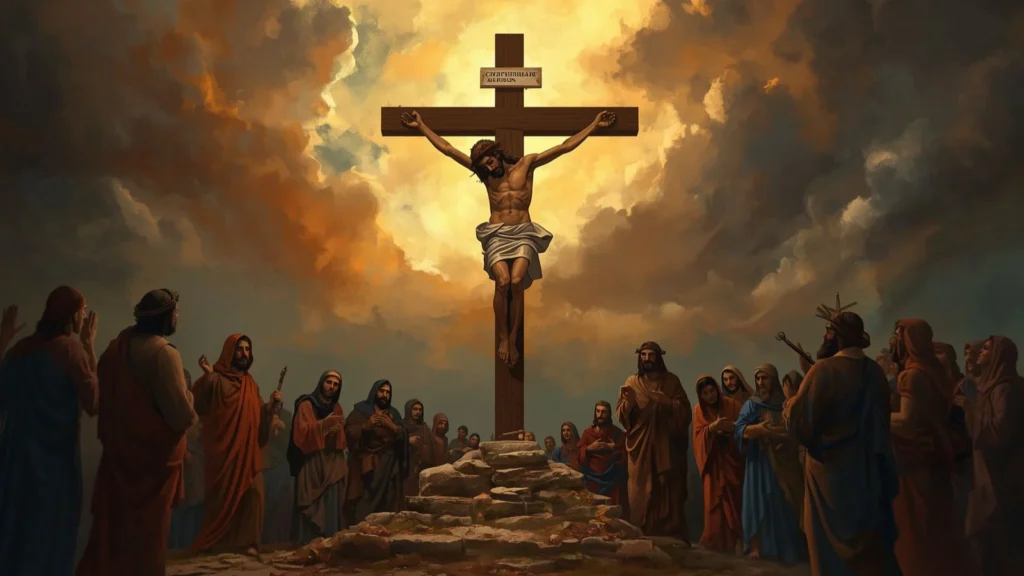

Good Friday is the Christian observance that commemorates the crucifixion and death of Jesus Christ at Calvary. It falls on the Friday before Easter Sunday and is considered one of the most solemn days in the Christian calendar.
Every year, billions of Christians around the world observe Good Friday, a day that commemorates the crucifixion of Jesus Christ and stands as one of the most significant events in Christianity. If you’ve ever wondered what is Good Friday, what does Good Friday represent, or searched for the Good Friday meaning, you’re not alone. Although its name may sound positive, the meaning of Good Friday is deeply connected to sacrifice, forgiveness, hope, and redemption. This sacred day invites believers to reflect on the immense love and suffering that, according to Christian faith, paved the way for salvation. In this guide, you’ll learn what is Good Friday, explore the true Good Friday meaning, discover why it is called “Good” Friday, and understand its history, traditions, and lasting importance for Christians around the world.
Good Friday Meaning Explained

At its core, Good Friday marks the day Jesus Christ was crucified under Roman governor Pontius Pilate in Jerusalem. The term itself might sound strange at first. After all, what is “good” about an innocent man being executed in one of the most brutal ways imaginable? The answer lies in Christian theology. The “good” refers to the ultimate good that came from this sacrifice. According to Christian belief, Jesus died to pay the penalty for humanity’s sins, opening the door for forgiveness and eternal life.
This day sits at the heart of the Christian faith. Without the crucifixion, there is no resurrection. Without the death, there is no victory over death. Good Friday meaning is deeply intertwined with the concept of atonement. It represents the moment when divine love met human suffering head-on and transformed it into hope. For believers, this is not a day of despair but a day of profound gratitude. The sorrow of the cross is viewed through the lens of the empty tomb that follows.
The observance is also called Holy Friday, Great Friday, or Black Friday in various traditions. Each name carries its own emotional weight. Holy Friday emphasizes sanctity. Great Friday highlights magnitude. Black Friday captures the darkness that fell over the land during the crucifixion according to the Gospels. Yet the most common name remains Good Friday, a testament to the Christian belief that the greatest good often emerges from the deepest pain.
Origin of the Term Good Friday
The exact origin of the name “Good Friday” has been debated by scholars for centuries. One widely accepted theory suggests that “good” once meant “holy” in Old English. In this sense, Good Friday would simply mean Holy Friday. Another theory proposes that the day is “good” because it led to the resurrection and salvation of humanity. The goodness is not in the suffering itself but in the outcome it produced.
The earliest recorded use of the term dates back to the 13th century in English texts. Before that, the day was referred to by various names across different languages and cultures. In Greek, it is called “Great Friday.” In German, “Karfreitag” which means sorrowful Friday. In Latin, “Veneris Sancti” meaning Holy Friday. These names reflect the universal recognition of the day’s significance while showing how different cultures processed its emotional weight.
The tradition of observing Good Friday developed gradually in the early Christian church. By the 4th century, records show Christians in Jerusalem walking the Via Dolorosa, the path Jesus took to the cross. This practice spread to other regions and evolved into the liturgical observances we see today. The day became a time of fasting, prayer, and reflection, stripped of the celebration that characterizes Easter Sunday.
Interestingly, the name Good Friday has survived despite its apparent contradiction. This survival speaks to the Christian conviction that God can work good even through the worst circumstances. The term has become so embedded in religious vocabulary that most English speakers never question it. Yet understanding its origins adds depth to the observance and helps newcomers grasp why a day of death carries such a positive name.
How People Observe and Reference Good Friday
People reference Good Friday in many different contexts, from casual conversation to deep theological discussion. The way it is mentioned often depends on the speaker’s background, beliefs, and the situation at hand. Some speak of it with reverence and emotion. Others mention it simply as a date on the calendar. Still others use it as a reference point for broader discussions about faith, history, or culture.
In friendly and personal settings, Good Friday often comes up in invitations or plans. Someone might say they cannot meet for lunch because they are attending a Good Friday service. A family might mention their tradition of eating fish instead of meat on this day. These conversations are warm and conversational. They reflect how deeply the observance is woven into the rhythms of many families and communities.
In professional or academic settings, the tone shifts toward neutrality and information. A history teacher might explain Good Friday meaning as part of a lesson on the Roman Empire. A colleague might note that the office closes for the Good Friday holiday. Here, the focus is on facts and logistics rather than spiritual significance. The tone remains respectful but detached.
In religious contexts, the tone becomes deeply reverent. Pastors and priests deliver sermons that explore the theological weight of the cross. Worshippers engage in liturgies that recount the seven last words of Christ. The atmosphere is solemn, often quiet, sometimes tearful. Music is subdued. Decorations are minimal. The entire environment is designed to help participants feel the gravity of what is being remembered.
There are also casual and even humorous references, though these are less common and sometimes controversial. Someone might joke about the irony of calling a day of execution “good.” A comedian might use Good Friday as a setup for a punchline about religious observance. While not inherently disrespectful, these references can feel dismissive to those who hold the day sacred. Context and audience awareness matter greatly.
Examples of Good Friday in Context
Table
| Example | Situation | Meaning | Tone |
|---|---|---|---|
| “We are hosting a Good Friday vigil at seven in the evening.” | Church announcement | Inviting the community to a religious service | Formal and reverent |
| “My grandmother never let us eat meat on Good Friday.” | Family memory sharing | Describing a traditional fasting practice | Warm and nostalgic |
| “The office will be closed on Good Friday.” | Workplace email | Informing employees about a holiday closure | Professional and neutral |
| I finally understand the Good Friday meaning after visiting Jerusalem. | Travel reflection | Expressing new insight from personal experience | Thoughtful and sincere |
| “Why do they call it Good Friday if something so terrible happened?” | Curious question from a child or newcomer | Seeking to understand the name’s origin | Innocent and inquisitive |
| “Good Friday always makes me emotional thinking about what he went through.” | Personal social media post | Sharing private feelings about the observance | Vulnerable and heartfelt |
| “We are leaving Thursday night to beat the Good Friday traffic.” | Travel planning | Referencing the holiday as a logistical factor | Casual and practical |
| “Some people fast from sunrise to sunset on Good Friday.” | Educational explanation | Informing others about traditional practices | Neutral and informative |
Comparison With Similar Terms
Table
| Term | What It Means | How It Differs From Good Friday |
|---|---|---|
| Easter Sunday | Celebrates the resurrection of Jesus | Focuses on joy and victory rather than suffering and sacrifice |
| Holy Saturday | The day between crucifixion and resurrection | A day of waiting and silence rather than active commemoration |
| Palm Sunday | Marks Jesus’s triumphal entry into Jerusalem | Celebrates welcome and praise rather than rejection and death |
| Maundy Thursday | Commemorates the Last Supper | Focuses on institution of communion and service rather than crucifixion |
| Ash Wednesday | Begins the season of Lent | Starts a period of preparation rather than marking its climax |
| Passover | Jewish festival of liberation | Different religious tradition but historically connected timing |
| Black Friday | Day after Thanksgiving in the US | Completely secular, refers to shopping rather than religious observance |
Good Friday stands apart from these related days because of its singular focus on suffering and death. While Easter Sunday answers the sorrow with joy, Good Friday lingers in the pain. It does not rush to resolution. This willingness to sit with discomfort is part of what makes the observance so powerful for believers. It acknowledges that life contains moments of profound darkness, and faith does not ignore them.
Alternate Meanings of Good Friday
In most English-speaking contexts, Good Friday refers exclusively to the Christian observance. However, there are a few alternate or extended meanings worth noting.
In some regions, particularly where Christianity is the dominant culture, Good Friday has become a generic term for a public holiday. People who do not observe the religious significance may still refer to it as a day off work or school.
There is also a colloquial usage in some Caribbean cultures where “Good Friday” weather refers to unpredictable conditions. This stems from folk traditions that associate the day with strange atmospheric changes. While not a formal meaning, it shows how religious observances can seep into everyday language in unexpected ways.
Occasionally, the term is used metaphorically to describe any day of suffering that leads to eventual good. A person might say, “This was my Good Friday moment,” meaning a painful experience that preceded growth or healing. This usage is poetic rather than literal and requires shared cultural understanding to be effective.
Professional or Polite Alternatives
When discussing this observance in mixed company or formal writing, consider these alternatives depending on your intent.
- Holy Friday. This term carries the same religious weight without the potential confusion of why a day of death is called “good.” It is widely understood in Christian circles and sounds slightly more formal.
- Great Friday. Common in Eastern Orthodox traditions, this alternative emphasizes the magnitude of the event.
- The Friday before Easter. A purely descriptive phrase that avoids religious language entirely. Use this when speaking to a diverse audience where religious specificity might feel exclusive.
- The crucifixion observance. A more formal, almost clinical way to reference the day. Suitable for historical or academic writing where emotional distance is appropriate.
- The Paschal Triduum. This refers to the three-day period from Holy Thursday through Easter Sunday. Use this when you want to emphasize that Good Friday is part of a larger liturgical whole rather than an isolated event.
- Sorrowful Friday. A direct translation of the German “Karfreitag,” this alternative makes the emotional tone explicit. It can be helpful when explaining the observance to someone unfamiliar with Christian traditions.
Common Mistakes to Avoid
One common mistake is assuming everyone knows what Good Friday means. In increasingly secular societies, many people recognize the name without understanding its significance. Taking a moment to explain the observance shows respect and inclusivity.
Another mistake is conflating Good Friday with Easter Sunday. They are distinct observances with different emotional tones. Wishing someone “Happy Good Friday” can feel jarring because the day is solemn, not celebratory. Better alternatives include “Have a blessed Good Friday” or simply acknowledging the day with quiet respect.
Some people mistakenly believe Good Friday is a fixed date like Christmas. It actually moves every year because it depends on the lunar calendar and the timing of Passover.
In writing and speech, avoid using the day as a casual reference point without considering your audience. Mentioning Good Friday in a marketing email or social post can backfire if it feels exploitative or disrespectful. If you reference the day in a commercial context, do so with genuine sensitivity to its religious importance.
Finally, do not assume that all Christians observe Good Friday in the same way. Catholic, Orthodox, Protestant, and other traditions have different liturgies, fasting rules, and customs. What is appropriate in one tradition may be unfamiliar in another. When in doubt, ask or research rather than generalize.
Tips for Using the Term Naturally
If you want to reference Good Friday in conversation or writing, here are some practical guidelines.
First, match your language to your audience. In a church newsletter, rich theological language feels appropriate. In a workplace memo, keep it brief and factual. On social media, personal reflection works well if it comes from genuine experience rather than performative piety.
Second, use the full phrase “Good Friday” rather than abbreviations or shortcuts. Friday” alone loses the specific meaning entirely. The full term is already short and clear.
Third, pair the term with context clues when speaking to diverse audiences. This small addition helps those unfamiliar with the term feel included rather than excluded.
Fourth, be mindful of tone. Good Friday is not a day for exclamation points and party language. Even in casual conversation, a measure of respect is appropriate.
Fifth, if you are writing about Good Friday meaning for SEO purposes, include related terms naturally. Words like crucifixion, atonement, sacrifice, Lent, Easter, and resurrection help search engines understand your content’s context. However, avoid forcing these terms where they do not fit. Natural language always wins over keyword stuffing.
FAQs
Why is it called Good Friday if Jesus died?
The name likely comes from an older meaning of “good” that meant “holy” or “pious.” Another explanation is that the day is called good because of the tremendous good that resulted from Jesus’s sacrifice. The resurrection and salvation of humanity would not have happened without the crucifixion. So while the events were terrible, the outcome was the greatest good imaginable.
What do Christians do on Good Friday?
Christians observe Good Friday through prayer, fasting, attending church services, and reflecting on the passion of Christ. Many churches hold three-hour services commemorating the time Jesus spent on the cross. Some traditions include the Stations of the Cross, veneration of the cross, or reading the seven last words of Jesus. Fasting rules vary by denomination, but many Christians abstain from meat or limit themselves to one full meal.
Is Good Friday a public holiday everywhere?
No, it depends on the country. Good Friday is a public holiday in many Christian-majority nations and some secular countries with Christian heritage. However, it is not a federal holiday in the United States, though some states observe it. In countries with different dominant religions, it is a normal working day. Always check local calendars if you are planning travel or business around this date.
What is the difference between Good Friday and Easter Sunday?
Good Friday commemorates the crucifixion and death of Jesus. Easter Sunday celebrates his resurrection from the dead. Good Friday is solemn, mournful, and reflective. Easter Sunday is joyful, celebratory, and triumphant. Together they form the heart of the Christian faith, showing that death is not the end of the story.
Why does the date of Good Friday change every year?
This means Easter can fall anywhere between March 22 and April 25, and Good Friday moves accordingly. This system connects the Christian observance to the Jewish Passover, which also follows a lunar calendar.
Can non-Christians observe Good Friday?
Absolutely. While Good Friday is a Christian observance, anyone can attend services, learn about its meaning, or use the day for personal reflection. Many people find value in contemplating themes of sacrifice, forgiveness, and resilience regardless of their religious background. The key is to approach the day with respect for its spiritual significance rather than treating it as a curiosity.
What foods are traditionally eaten or avoided on Good Friday?
Many Christians traditionally fast or abstain from meat on Good Friday. Some cultures have specific traditional foods. In England, hot cross buns are popular. In India, many Christians prepare vegetarian dishes. The specifics vary widely by culture and denomination.
Is Good Friday mentioned in the Bible?
The exact phrase “Good Friday” does not appear in the Bible.. Matthew, Mark, Luke, and John each provide accounts of Jesus’s arrest, trial, crucifixion, and burial. The Bible describes these events occurring on the day before the Jewish Sabbath during Passover week, which corresponds to Friday in the narrative.
Conclusion
Good Friday meaning is far richer than a single definition can capture. It is a day of sorrow and sacrifice, yes, but also a day that Christians believe changed the course of human history.
The cross represents the intersection of divine love and human suffering, a place where innocence was punished so that guilt could be forgiven.