
Definition:
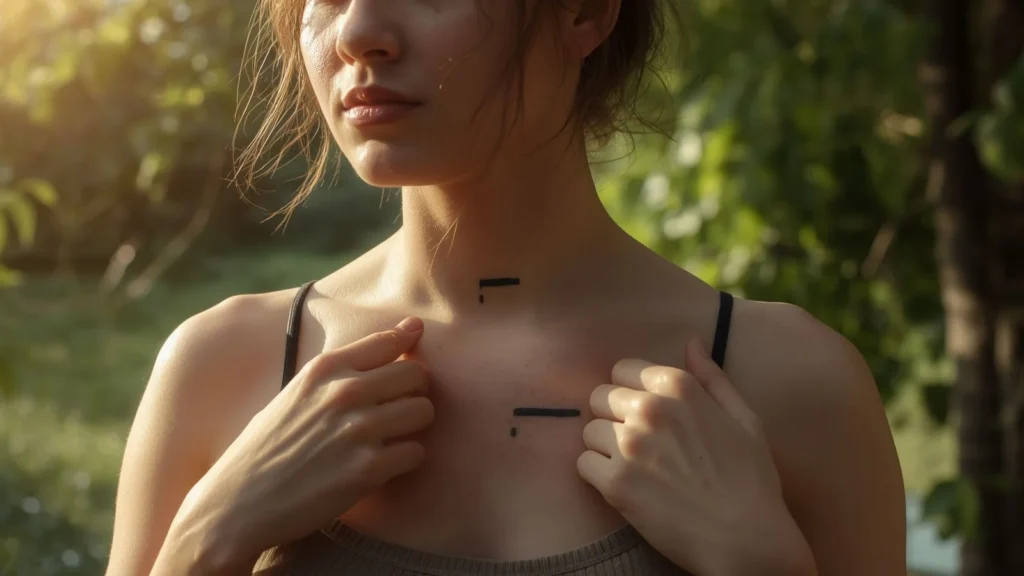
A semicolon tattoo is a small, minimalist ink design featuring the punctuation mark “;” that has evolved into one of the most powerful symbols in modern body art. While a semicolon in grammar indicates where an author could have ended a sentence but chose to continue, the tattooed version carries a deeply personal message: “My story isn’t over yet.”
This tiny mark has become a global emblem of mental health awareness, suicide prevention, and the resilience of those who have battled depression, anxiety, addiction, self-harm, or suicidal thoughts. It’s a quiet but profound declaration that the wearer chose to keep going when ending their story felt like the only option.
The Origin Story: How a Punctuation Mark Became a Lifeline
The Project Semicolon Movement
The semicolon tattoo meaning traces back to Project Semicolon, founded in 2013 by Amy Bleuel in Green Bay, Wisconsin. Amy’s vision was beautifully simple yet revolutionary: create a platform where people struggling with mental illness, addiction, self-injury, and suicide could share their stories and find community.
Amy’s personal connection to the symbol was deeply rooted in loss. After her father died by suicide, she sought a way to honor his memory while supporting others walking similar dark paths. She chose the semicolon because, as she explained, “A semicolon is used when an author could’ve chosen to end their sentence, but chose not to. The author is you, and the sentence is your life.”
Tragically, Amy herself lost her battle with mental illness and died by suicide in 2017. Yet her legacy lives on through the millions of people who wear this mark and the conversations it continues to spark.
From Online Movement to Global Phenomenon
What started as a social media campaign quickly transcended the digital world. By 2015, the semicolon tattoo had exploded across Instagram, Pinterest, and tattoo parlors worldwide. The beauty of this trend lay in its accessibility:
- Size: Small enough to hide or reveal as desired
- Cost: Affordable for nearly everyone
- Versatility: Works anywhere on the body
- Universality: Transcends language and culture
The movement gained celebrity endorsement when figures like Selena Gomez and her friends got matching semicolon tattoos, bringing mainstream visibility to mental health conversations that had long lingered in shadows.
What the Semicolon Tattoo Really Means: Beyond the Surface
The Core Message: “I Chose to Continue”
At its heart, the semicolon tattoo meaning is about agency and choice. In a world where mental illness can make people feel powerless, this mark represents the moment someone decided to stay. It’s not about being “cured” or “fixed”—it’s about choosing to see what the next chapter holds.
Who Gets Semicolon Tattoos?
The community of semicolon tattoo wearers is beautifully diverse:
Table
| Category | What It Represents | Common Placement |
|---|---|---|
| Mental Health Survivors | Overcoming depression, anxiety, bipolar disorder, PTSD | Wrist, behind ear, ribcage |
| Suicide Attempt Survivors | Choosing life after reaching the brink | Inner wrist, heart area |
| Addiction Recovery | Sobriety milestones and ongoing commitment | Forearm, ankle |
| Self-Harm Recovery | Healing from cutting or self-injury | Areas covering scars |
| Supporters & Allies | Solidarity with loved ones who struggle | Wrist, shoulder |
| Grief & Loss | Honoring someone who died by suicide | Over heart, memorial placement |
The Hidden Language of Placement
Where someone places their semicolon tattoo often carries additional meaning:
- Wrist: Visibility for self-reminder and public awareness; often covering self-harm scars
- Behind the ear: Private strength; a personal secret of survival
- Over the heart: Deep emotional connection to the meaning; honoring lost loved ones
- Finger: A daily visible reminder during difficult moments
- Ribcage/Under breast: Hidden but deeply personal; close to vital organs
Real World Usage: When and How People Reference Semicolon Tattoos
Friendly, Supportive Tone 😊
The semicolon tattoo creates instant connection between strangers who recognize its meaning:
“I noticed your semicolon tattoo. I’ve got one too—three years of choosing to stay. You’re not alone in this.”
“My sister and I got matching semicolons after our mom’s bipolar diagnosis. It’s our way of saying we’re in this together, no matter what.”
“Every time I look at my wrist, I remember that April morning when I called the crisis line instead of… well, instead. That semicolon is my proof that I’m still writing my story.”
Neutral, Informative Tone 📋
In professional mental health contexts, the tattoo serves as a conversation starter:
“The semicolon tattoo has become a recognizable symbol in therapeutic settings. Many clinicians report that clients use the mark as an entry point to discuss their mental health history.”
“Workplace policies on visible tattoos have had to evolve as mental health awareness symbols like the semicolon become more common among professionals.”
Cautionary or Dismissive Tone ⚠️
Not all usage is positive. Some critics argue:
While well-intentioned, the semicolon tattoo has been criticized for becoming a ‘trend’ that dilutes its serious meaning. Mental health advocates emphasize that getting the tattoo should accompany genuine commitment to wellness, not just aesthetic appeal.”
“Some worry that the symbol has been co-opted by people who don’t understand its gravity, turning a marker of survival into a fashion statement.”
The Grammar Connection: Why the Semicolon Specifically?
The choice of the semicolon wasn’t random—it was linguistically and symbolically perfect:
Table
| Punctuation | Grammatical Function | Why It Didn’t Work |
|---|---|---|
| Period (.) | Ends a sentence completely | Too final; implies death |
| Comma (,) | Brief pause | Too casual; implies temporary struggle |
| Question Mark (?) | Indicates uncertainty | Too ambiguous; doesn’t convey choice |
| Exclamation Point (!) | Shows excitement | Too energetic; mismatches the tone |
| Ellipsis (…) | Trailing off | Too passive; implies fading away |
| Semicolon (;) | Connects two related independent clauses | Perfect: implies continuation, connection, and deliberate choice |
The semicolon says: “This thought was complete, but I had more to say.” In the context of life and death, that “more to say” becomes extraordinarily powerful.
Comparison: Semicolon Tattoo vs. Similar Symbols
Mental health awareness has spawned several symbolic tattoos. Here’s how they compare:
Table
| Symbol | Meaning | Best For | Visibility |
|---|---|---|---|
| Semicolon (;) | Suicide prevention, choosing to continue | Personal survival, broad mental health awareness | High recognition |
| Green Ribbon | General mental health awareness | Advocacy, supporting the cause | Lower tattoo recognition |
| Butterfly | Transformation, recovery from self-harm | Self-harm recovery specifically | Moderate; multiple meanings |
| Phoenix | Rising from ashes, rebirth | Major life transformation | Moderate; can feel dramatic |
| Lotus Flower | Growing through mud/difficulty | Overcoming adversity generally | High; less specific to mental health |
| “Alive” or Roman Numerals | Sobriety dates, survival anniversaries | Specific milestone marking | Low; requires explanation |
| Semi-Colon + Heart | Love and survival combined | Romanticizing the journey | High; very popular variant |
When to Choose the Semicolon Over Alternatives
- You want instant recognition within the mental health community
- You prefer minimalist, subtle body art
- Your story involves suicidal ideation or attempts specifically
- You want a symbol that works professionally (small and hideable)
- You value grammatical/wordplay depth in your tattoo’s meaning
Alternate Meanings and Variations
While the mental health meaning dominates, the semicolon tattoo occasionally carries other significance:
Writers and Grammar Enthusiasts 📚
Some authors, editors, and English teachers get semicolon tattoos purely celebrating their love of language. These are usually distinguishable by:
- Larger, more stylized designs
- Accompanying text or book imagery
- Placement less associated with mental health visibility
The “Programmer’s Semicolon” 💻
In coding languages like JavaScript and C++, the semicolon is essential syntax. Developers sometimes get the tattoo as a nod to their profession—though this usage has declined as the mental health meaning became dominant.
Combination Designs
Table
| Variation | Added Meaning | Popular Style |
|---|---|---|
| Semicolon + Butterfly | Transformation after choosing life | Watercolor butterfly wings on the semicolon |
| Semicolon + Heart | Self-love and survival | Heart replacing the dot |
| Semicolon + Arrow | Moving forward | Arrow through or beside the mark |
| Semicolon + Flower | Growth and blooming | Floral elements wrapping the punctuation |
| Semicolon + Quote | Personal mantra | “And so she goes on” or “Still here” |
Polite and Professional Alternatives
Not everyone wants or can get a tattoo. Here are meaningful alternatives that carry similar symbolism:
For Personal Remembrance
- Semicolon jewelry: Necklaces, bracelets, or rings featuring the mark
- Semicolon artwork: Framed prints for home or office
- Custom phone wallpaper: Daily digital reminder
For Advocacy and Support
- Wearing green: The official color of mental health awareness
- Project Semicolon merchandise: T-shirts, pins, and stickers that fund the organization
- Crisis line programming: Saving 988 (US) or local equivalents in your phone
For Conversation and Connection
- Semicolon-themed coffee mugs or notebooks: Subtle signals to those who know
- Bookmarks with the symbol: For the literary-minded survivor
- Garden stones or plants: “Growing through what you go through”
Professional Contexts
In workplaces or formal settings where tattoos might be covered, consider:
- Lapel pins: Small semicolon pins for suits or blazers
- Tie clips or cufflinks: Discreet but meaningful
- Business card notation: Some mental health professionals include the symbol subtly
FAQ
1. What does a semicolon tattoo mean?
A semicolon tattoo symbolizes that the wearer chose to continue their life story despite struggling with mental illness, suicidal thoughts, addiction, or self-harm. Based on the grammatical rule that a semicolon connects related thoughts when a sentence could have ended, it represents the choice to keep going rather than ending one’s life.
2. Who can get a semicolon tattoo?
Anyone can get a semicolon tattoo, though mental health advocates encourage genuine connection to its meaning. You don’t have to have attempted suicide—survivors of depression, anxiety, addiction, and self-harm, as well as allies who have supported others through these struggles, commonly wear the symbol. The key is respecting its gravity rather than treating it as a fashion trend.
3. Where is the best place to get a semicolon tattoo?
The wrist is the most common placement because it’s visible as a daily reminder and can cover self-harm scars. Other popular spots include behind the ear (private but meaningful), over the heart (emotional connection), the finger (constant visibility), and the ankle (subtle). Choose a location that feels personally significant and fits your lifestyle.
4. Is the semicolon tattoo only for suicide attempt survivors?
No. While it originated in suicide prevention, the semicolon tattoo meaning has expanded to include anyone who has faced mental health challenges, addiction, self-harm, or traumatic loss. Allies who want to show solidarity and reduce stigma also wear the symbol. However, if you haven’t personally experienced these struggles, approach the tattoo with education and respect for its origins.
5. How much does a semicolon tattoo cost?
Because of its small size, a semicolon tattoo is one of the most affordable designs available. Prices typically range from $50 to $150 depending on the artist’s rates, location, and any custom elements. Many tattoo shops offer discounted rates for semicolon tattoos during mental health awareness events. Its affordability has helped democratize the symbol across economic backgrounds.
6. What is Project Semicolon?
Project Semicolon is a nonprofit mental health organization founded by Amy Bleuel in 2013. It started as a social media movement encouraging people to draw semicolons on their wrists and share their stories. The organization provides resources for those struggling with mental illness, addiction, self-injury, and suicide, while working to reduce stigma through education and community building.
Conclusion:
The semicolon tattoo meaning has transcended its origins to become one of the most recognizable symbols of resilience in modern culture.
In a world where mental illness still carries stigma, this tiny mark does something revolutionary: it makes the invisible visible. It turns private battles into public solidarity. It transforms shame into story.