

Quick Answer
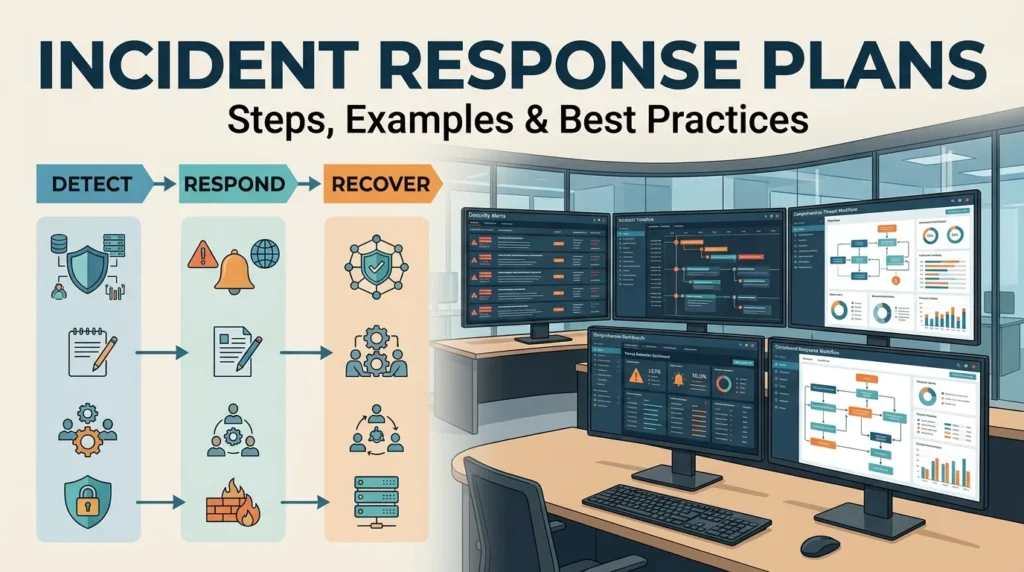
An incident response plan is a written guide that explains how an organization should prepare for, detect, handle, and recover from a security incident. It gives people clear roles and steps to follow so they can respond quickly instead of making decisions during a crisis.
Top elements: preparation, detection, containment, investigation, recovery, communication
What Is an Incident Response Plan?
An incident response plan is a document that explains what an organization should do when a security incident happens.
The incident could involve malware, phishing, stolen credentials, unauthorized access, a data breach, or another security problem.
Instead of trying to figure everything out during an emergency, the team can follow the plan and know who should act first.
Example: An employee reports that their account may have been compromised.
Meaning: The incident response plan helps the security team decide how to investigate and contain the problem.
Why Are Incident Response Plans Important?
Security incidents can become worse when people don’t know what to do.
A good plan gives the organization a clear process. It can also reduce confusion, improve communication, and help teams recover faster.
An incident response plan can help an organization:
- Respond quickly
- Reduce damage
- Protect important data
- Assign responsibilities
- Improve communication
- Support recovery
- Document what happened
- Learn from previous incidents
Example: A company discovers suspicious activity on a server.
Meaning: Instead of reacting randomly, the team follows an established process.
What Should an Incident Response Plan Include?
A basic incident response plan should explain the following:
| Element | Purpose |
|---|---|
| Roles | Shows who is responsible |
| Detection | Explains how incidents are identified |
| Reporting | Shows how incidents should be reported |
| Containment | Limits the damage |
| Investigation | Helps determine what happened |
| Recovery | Restores normal operations |
| Communication | Keeps the right people informed |
| Documentation | Creates a record of the incident |
| Review | Helps improve the plan |
The exact contents depend on the organization, its systems, and the types of incidents it expects to face.
Incident Response Plan Steps
Most incident response processes follow several major stages.
Preparation
The organization prepares before an incident happens.
This can include creating policies, assigning roles, training employees, maintaining security tools, and preparing contact lists.
Example: A company creates an emergency security contact list.
Meaning: The team knows who to contact before a real incident occurs.
Detection and Analysis
The team identifies a possible incident and determines what happened.
Security alerts, employee reports, monitoring systems, and unusual activity can help identify problems.
Example: A monitoring system detects repeated login attempts from an unusual location.
Meaning: The security team investigates whether the activity is legitimate or suspicious.
Containment
The organization takes steps to stop the incident from spreading.
Depending on the situation, this could involve isolating a device, disabling an account, or restricting access.
Example: A compromised computer is disconnected from the network.
Meaning: The organization is trying to prevent further damage.
Eradication
The team works to remove the cause of the incident.
This may involve removing malicious software, fixing vulnerabilities, or resetting compromised credentials.
Example: Security staff remove malware from an affected system.
Meaning: The organization is working to eliminate the threat.
Recovery
The organization restores affected systems and returns to normal operations.
Teams may restore backups, monitor systems, and verify that affected services are safe.
Example: A company restores a clean backup after a ransomware incident.
Meaning: The organization is bringing its systems back into operation.
Lessons Learned
After the incident, the team reviews what happened.
The goal is to understand what worked, what didn’t, and what should change.
Example: A company discovers that employees need additional phishing training.
Meaning: The organization uses the incident to improve future security.
Types of Incident Response Plans
Different organizations may create different plans based on the incidents they are most likely to face.
Data Breach Response Plan
This plan focuses on situations where sensitive information may have been accessed, exposed, or stolen.
It can cover investigation, containment, communication, and required notifications.
Malware Response Plan
This plan focuses on malicious software such as viruses, trojans, or ransomware.
It explains how affected systems should be identified, isolated, cleaned, and restored.
Phishing Response Plan
This plan explains what to do when an employee receives or interacts with a suspicious message.
It may include reporting the email, securing the affected account, and checking for additional compromise.
Ransomware Response Plan
This plan focuses on attacks where systems or data may be encrypted or otherwise held by attackers.
It can define isolation, investigation, recovery, and communication procedures.
Insider Threat Response Plan
This type of plan addresses incidents involving authorized users who may misuse access intentionally or accidentally.
Account Compromise Response Plan
This plan explains what to do when login credentials may have been stolen.
It can include securing the account, changing credentials, reviewing activity, and checking for unauthorized access.
Who Is Responsible for Incident Response?
Incident response is usually not the responsibility of one person.
Depending on the organization, several teams may become involved, including:
- Security team
- IT team
- Management
- Legal team
- Human resources
- Communications team
- Compliance team
- External security specialists
Each person should understand their role before an incident occurs.
Example: The security team investigates the technical problem while management handles major business decisions.
Meaning: Clear responsibilities prevent confusion during an incident.
Incident Response Plan Roles
A simple plan can assign specific responsibilities.
| Role | Main Responsibility |
|---|---|
| Incident leader | Coordinates the response |
| Security team | Investigates and contains threats |
| IT team | Handles affected systems |
| Management | Makes major business decisions |
| Legal team | Advises on legal requirements |
| Communications | Handles internal or external messaging |
| HR | Handles employee-related issues |
| Compliance | Reviews regulatory obligations |
Not every organization needs all of these roles. Smaller businesses may combine several responsibilities.
Incident Response Plan Example
A simple incident response plan might look like this:
Step 1: Employee reports suspicious activity.
Step 2: Security team records the incident.
Step 3: Team determines whether it is a real security incident.
Step 4: Affected systems or accounts are contained.
Step 5: Security team investigates the cause.
Step 6: The threat is removed.
Step 7: Systems are restored and monitored.
Step 8: The organization documents what happened.
Step 9: The team reviews the incident and improves the plan.
This basic structure can then be expanded based on the organization’s needs.
Incident Response Plan vs Disaster Recovery Plan
These two plans are related, but they are not the same.
An incident response plan focuses on handling and managing a security incident.
A disaster recovery plan focuses on restoring systems and operations after a major disruption.
| Incident Response Plan | Disaster Recovery Plan |
|---|---|
| Focuses on responding to incidents | Focuses on restoring operations |
| Investigates the problem | Restores systems and data |
| Contains threats | Recovers critical services |
| Often involves security teams | Often involves IT and business teams |
| Helps manage the incident | Helps return to normal operations |
An organization may use both plans together.
How to Create an Incident Response Plan
Creating a plan doesn’t have to be complicated.
Start by identifying the systems and information that are most important to the organization.
Then identify common threats and decide how the team should respond to each one.
A basic process is:
- Identify important assets.
- Identify likely incidents.
- Assign response roles.
- Create reporting procedures.
- Define containment steps.
- Create recovery procedures.
- Prepare communication methods.
- Document important contacts.
- Test the plan.
- Update it regularly.
The plan should be easy to find and easy to understand when people are under pressure.
How Often Should an Incident Response Plan Be Tested?
An incident response plan should be tested regularly rather than being created once and forgotten.
Organizations can use tabletop exercises, simulations, technical exercises, or other tests to see whether the plan works.
Testing can reveal problems such as outdated contact information, unclear responsibilities, or missing procedures.
Example: A company runs a simulated phishing incident and discovers that employees aren’t sure where to report it.
Meaning: The exercise identifies a weakness before a real incident occurs.
Common Incident Response Plan Mistakes
Even a detailed plan can fail if it isn’t maintained.
Common problems include:
- Not assigning clear responsibilities
- Using outdated contact information
- Forgetting to test the plan
- Making the plan too complicated
- Failing to document incidents
- Ignoring communication procedures
- Not updating the plan after major changes
- Assuming one plan works for every incident
A useful plan should be practical, clear, and easy to follow.
Incident Response Plan Checklist
Before considering your plan ready, check whether it includes:
- Incident response team
- Roles and responsibilities
- Emergency contacts
- Incident reporting process
- Detection procedures
- Analysis procedures
- Containment steps
- Eradication procedures
- Recovery steps
- Communication process
- Documentation requirements
- Testing schedule
- Review and update process
This checklist can help identify missing parts before an actual incident happens.
FAQs
What is an incident response plan?
An incident response plan is a documented guide that explains how an organization should handle a security incident.
Why is an incident response plan important?
It helps teams respond quickly, reduce confusion, limit damage, and recover from incidents.
What are the main steps of incident response?
The main stages are preparation, detection and analysis, containment, eradication, recovery, and lessons learned.
What is the purpose of incident response?
The purpose is to identify, manage, contain, and recover from incidents while reducing their impact.
Who creates an incident response plan?
Security, IT, management, legal, compliance, and other teams may work together to create the plan.
What is an example of an incident response plan?
A basic example starts with reporting an incident, investigating it, containing the threat, removing the cause, restoring systems, and reviewing what happened.
What is the difference between incident response and disaster recovery?
Incident response focuses on handling the incident, while disaster recovery focuses mainly on restoring systems and business operations.
How often should an incident response plan be updated?
It should be reviewed regularly and updated when systems, risks, responsibilities, or business processes change.
Should an incident response plan be tested?
Yes. Testing helps organizations find weaknesses before a real incident occurs.
What incidents should an incident response plan cover?
It can cover incidents such as malware, phishing, ransomware, data breaches, stolen credentials, unauthorized access, and insider threats.
Conclusion
An incident response plan gives an organization a clear way to handle security problems when they happen. Instead of wasting time deciding what to do during a crisis, employees can follow defined steps and responsibilities.
A useful plan should cover preparation, detection, containment, investigation, recovery, communication, and lessons learned. It should also be tested and updated regularly.
The most important thing is to keep the plan practical. People should be able to understand it quickly when something goes wrong. A simple, tested plan is much more useful than a long document that nobody knows how to use.
See Also More :
- Can Someone Else Read Your Instagram Story Reply In 2026
- 200+ Reply to “Have a Good Day Reply” That Sound Polite, Friendly & Memorable In 2026